

Breaking news is defined as urgent, newly received information about events that have just happened or are currently unfolding. The term appears across television, online platforms, and social media, where editors and producers use it to signal that a story demands immediate attention. What separates breaking news from standard reporting is not just timing. It is the combination of public significance, rapid development, and the pressure to publish before full verification is complete. Understanding this distinction helps you read live coverage more critically and avoid the confusion that early, incomplete reports often create.
What is breaking news in professional journalism?
Breaking news, in newsroom practice, is an unfolding, time-pressured situation that prioritizes speed and core fact reporting over comprehensive context. Editors do not wait for a complete picture before publishing. They publish what is confirmed, then update as more information arrives.
This workflow creates a clear internal division between two types of verification:
- Quick-checking: A rapid triage process that assesses which claims are safe to publish immediately versus which require slower confirmation. PA Media's QuickCheck service is built specifically for this purpose, helping newsrooms maintain editorial standards under deadline pressure.
- Full fact-checking: A comprehensive review process that can take days. This level of verification is not possible during live coverage.
- Incremental updates: Editorial teams publish updates with stronger sources progressively, reducing the risk of overturning early claims with major corrections.
- Source triage: Reporters prioritize official statements, wire services like the Associated Press or Reuters, and on-the-ground witnesses before citing social media posts.
Pro Tip: When you see a breaking news alert, check the timestamp on each update. A story with three updates in 30 minutes is still developing. Treat early details as provisional, not final.
The goal in breaking coverage is trusted context at pace. Editorial judgment, not automation, determines what gets published first.

What is the breaking news cycle and how does it shape perception?
The news cycle is defined as the interval between a significant event and its replacement by newer news. Breaking news sits at the start of that cycle, where public attention is highest and verified information is lowest.
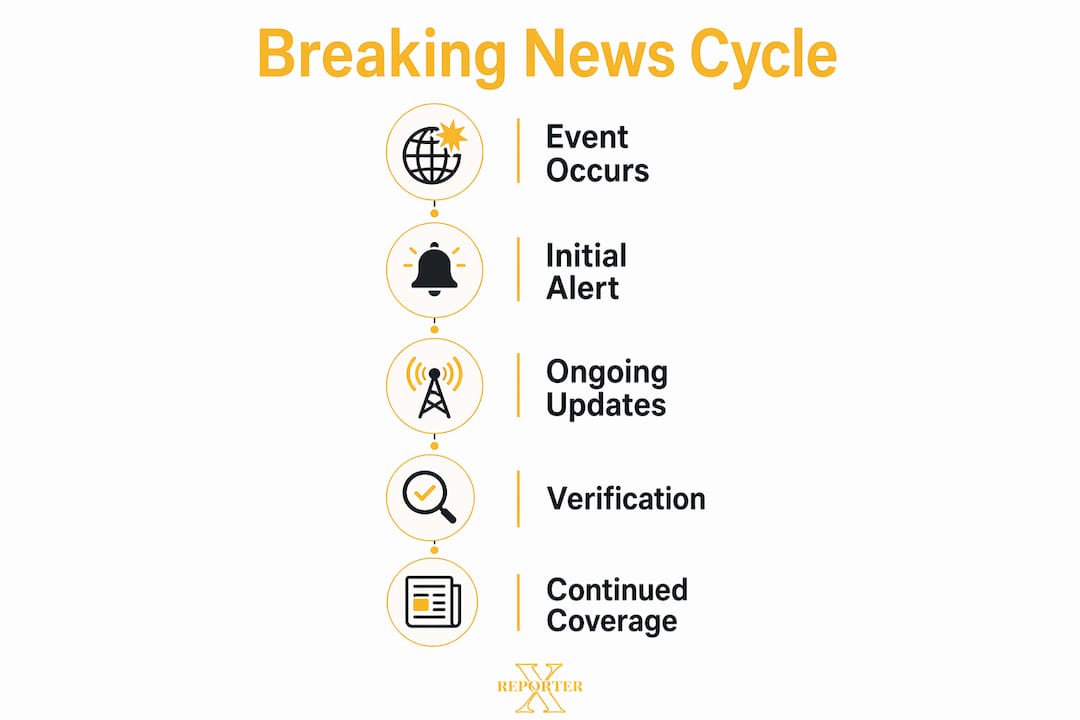
Here is how a typical breaking news cycle unfolds:
- Initial alert: A reporter or wire service publishes the first confirmed detail, often a single sentence. Context is minimal.
- Rapid updates: Newsrooms add facts as sources confirm them. Early details may be revised or corrected.
- Developing coverage: Reporters add background, official statements, and expert analysis. The story gains depth.
- Peak saturation: Multiple outlets run the story simultaneously. Audiences form initial opinions based on early framing.
- Displacement: A newer story pushes the original off the front page. Public attention shifts, often before full context is established.
The psychological effect here is significant. Breaking news language signals ongoing verification to journalists, but audiences often interpret it as a signal of completeness. The word "breaking" creates a sense of immediacy that implies the full story is known. That gap between journalistic intent and audience interpretation is where misinformation takes hold.
"The news cycle explains how public attention and certainty around breaking news evolve quickly, often giving an illusion of immediate full understanding." — Cambridge Dictionary
Digital media compresses this cycle further. Online updates can outpace traditional publication cycles by 6–8 hours during major events. That acceleration means audiences encounter more early-stage, unverified information than at any previous point in journalism history.
How to identify credible breaking news
Identifying credible breaking news requires separating verified core facts from developing information. The two are not the same, and early reports routinely mix them.
Credible breaking coverage shares several recognizable traits:
- Named sources: Verified reports cite officials, agencies, or named witnesses. Anonymous sourcing in early coverage is a warning sign, not a standard.
- Explicit uncertainty: Trustworthy outlets state what is not yet confirmed. Phrases like "officials have not yet confirmed" or "details are still emerging" reflect honest reporting, not weakness.
- Correction transparency: Outlets that publish updates and retractions as part of responsible journalism are more reliable than those that quietly alter early reports without acknowledgment.
- Wire service sourcing: Reports that cite the Associated Press, Reuters, or AFP as primary sources carry higher initial credibility than those built entirely on social media posts.
- Separation of fact and speculation: Credible outlets label analysis and commentary differently from confirmed facts, especially during live coverage.
Learning how news stories are verified helps you apply these standards in real time. The difference between quick-checking and full fact-checking is not a flaw in journalism. It is a structural reality of live reporting that every news consumer should understand.
Pro Tip: Follow the same story across two or three outlets with different editorial standards. Where accounts diverge, the truth is still developing. Where they align, you have a stronger factual baseline.
How has digital media changed breaking news?
Digital media has fundamentally altered the speed, reach, and accuracy profile of breaking news. The shift from broadcast and print to digital-first publishing changed what "live news coverage" means in practice.
| Factor | Traditional Media | Digital Media |
|---|---|---|
| Update frequency | Hours between editions | Minutes between posts |
| Audience reach | Regional or national broadcast | Global, real-time |
| Correction visibility | Printed errata, next-day | Inline edits, often unmarked |
| Source diversity | Wire services, staff reporters | Social media, citizen journalists |
| Misinformation risk | Lower, slower spread | Higher, faster amplification |
Social media platforms accelerate how breaking news spreads digitally, often pushing unverified claims to millions of users before any newsroom has confirmed the facts. This dynamic forces editorial teams to adapt. Many now run dedicated digital desks that monitor social signals, cross-reference claims against wire feeds, and publish updates on a rolling basis rather than waiting for a complete story.
The news cycle dynamics and breaking news shape billions of people's news consumption globally. That scale means a single inaccurate early report can reach a mass audience before any correction is issued. Newsrooms that understand this risk build verification checkpoints directly into their digital workflows, not as an afterthought.
Key takeaways
Breaking news is urgent, time-sensitive reporting that prioritizes confirmed core facts over complete context, and responsible consumption requires treating early reports as provisional until multiple credible sources align.
| Point | Details |
|---|---|
| Core definition | Breaking news is newly received, urgent information about events that are just happening or unfolding. |
| Verification tiers | Quick-checks assess immediate publishability; full fact-checks take days and are not possible during live coverage. |
| News cycle effect | Breaking stories are displaced quickly, often before full context reaches the public. |
| Credibility signals | Named sources, explicit uncertainty, and correction transparency mark reliable breaking coverage. |
| Digital acceleration | Online updates outpace traditional cycles by 6–8 hours, raising the risk of early misinformation. |
The speed trap nobody talks about
I have watched breaking news coverage long enough to recognize a pattern that rarely gets named directly. The speed trap is not about getting facts wrong. It is about the confidence with which incomplete facts get delivered.
Newsrooms under pressure do not always hedge visibly. A reporter on camera states what is known as if the picture is complete, because uncertainty does not hold an audience. That performance of confidence is what audiences absorb. The correction that follows 90 minutes later reaches a fraction of the original viewers.
The uncomfortable truth is that the "breaking" label has become a tool for audience retention as much as a journalistic signal. Understanding how news commentary shapes public opinion is part of reading live coverage critically. The most informed news consumers are not the fastest. They are the ones who wait for the second or third update before forming a firm view. That discipline is harder than it sounds when every platform is designed to reward immediate reaction.
— Trevor
Stay ahead of breaking stories with Thexreporter
Breaking news moves fast. Staying accurately informed requires a source that filters signal from noise before you encounter it.
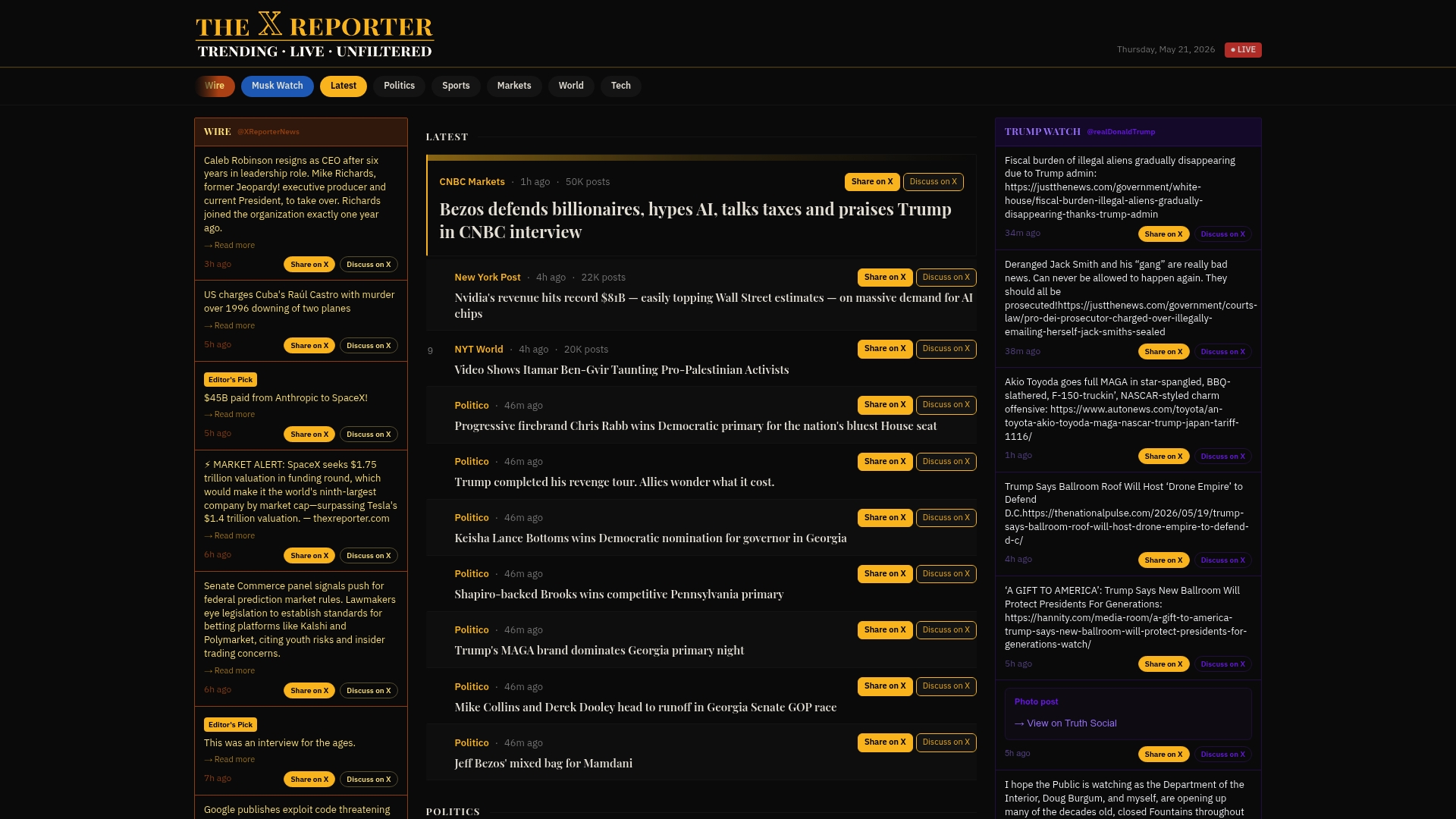
Thexreporter delivers concise editorial summaries across politics, technology, and markets, giving you the verified core facts without the clutter of early, unconfirmed reports. Each summary is built around confirmed information, not speculation, so you get context alongside speed. Whether a major policy decision drops or markets shift on unexpected data, Thexreporter surfaces what matters and explains why it matters. Visit Thexreporter to follow breaking developments with the clarity and precision that fast-moving news demands.
FAQ
What is the standard definition of breaking news?
Breaking news is newly received, urgent information about events that have just occurred or are currently unfolding. The Oxford Learner's Dictionary defines it as news about something that has just happened.
What is a news cycle in relation to breaking news?
The news cycle is the period between a significant event and its replacement by newer news. Breaking news occupies the opening phase of that cycle, where facts are fewest and public attention is highest.
Why do breaking news reports get corrected so often?
Early breaking reports reflect quick-checks, not full fact-checks. Quick-checks assess what is safe to publish immediately, while comprehensive verification takes days. Corrections follow as more confirmed information becomes available.
How do i identify credible breaking news coverage?
Credible breaking coverage cites named sources, acknowledges what is unconfirmed, and publishes visible corrections. Reports built on anonymous social media posts without wire service confirmation carry higher inaccuracy risk.
How has digital media changed live news coverage?
Digital publishing allows updates to outpace traditional cycles by 6–8 hours during major events. That speed increases the volume of early-stage, unverified information audiences encounter before a full picture emerges.