

Breaking news moves fast. Within minutes of a major event, dozens of headlines compete for attention, social media fills with unverified claims, and the pressure to stay informed can override the judgment needed to actually comprehend latest news accurately. To truly understand breaking news updates, you need more than a news app. You need a structured approach that separates verified facts from speculation, helps you recognize how stories evolve, and keeps you from reacting to incomplete information. This guide covers exactly that.
Table of Contents
- Key takeaways
- How to understand breaking news updates: tools and sources
- A step-by-step approach to analyzing breaking news
- Common pitfalls when following breaking news
- How to verify breaking news before sharing or acting
- My take on mastering breaking news in 2026
- Stay informed with Thexreporter
- FAQ
Key takeaways
| Point | Details |
|---|---|
| Start with official sources | Government agencies and institutions provide attributable, timestamped information that is easier to verify. |
| Use curated news aggregators | Personalized news apps help filter relevant updates and reduce information overload. |
| Follow a verification process | Cross-referencing multiple reputable outlets before acting on a report reduces the risk of misinformation. |
| Understand how news cycles work | Stories evolve rapidly. Early reports often contain errors that are corrected in subsequent updates. |
| Avoid social media as a primary source | Social platforms amplify speed but sacrifice accuracy. Use them to spot trends, not confirm facts. |
How to understand breaking news updates: tools and sources
Before you can analyze current events effectively, you need the right infrastructure in place. Not all news sources carry equal weight, and the difference between a reliable outlet and an unverified social post can be significant when a story is still developing.
Official institutions are the most structurally reliable starting point. The White House News page and the NOAA Storm Prediction Center are two examples of government sources that publish structured, attributable updates with timestamps. These sources are not chasing clicks. They publish because there is a procedural obligation to inform.

Curated news aggregators add another layer of utility. News aggregation apps pull vetted content from multiple outlets including major broadcast and digital networks, which gives you a broader picture than any single source can provide. Pairing aggregators with personalized topic filters helps you stay focused on sectors that matter most to you, whether that is financial markets, geopolitics, or public health.
Here is a reference checklist of the core tools worth setting up:
- Official agency feeds: Government press offices, emergency management agencies, financial regulators
- Curated aggregator apps: Multi-source platforms with topic and location filtering
- RSS readers: Pull headlines from specific outlets directly without algorithmic interference
- Push notifications: Reserved for high-priority topics only, not general browsing
Pro Tip: Selective push notifications are far more useful than broad ones. Managing your alerts by limiting them to two or three trusted sources per topic prevents alert fatigue without leaving you uninformed.
A step-by-step approach to analyzing breaking news
Once your sources are set up, the real work begins. Grasping real-time news as it unfolds requires a deliberate process rather than passive scrolling.
-
Identify the confirmed facts first. When a story breaks, ask what has actually been confirmed versus what is being speculated. Separate direct quotes and official statements from analyst commentary.
-
Cross-reference with at least two independent sources. A single outlet reporting an event does not confirm it. Look for corroboration from outlets with distinct editorial teams and different ownership structures.
-
Check the timestamp on every update. News organizations frequently revise stories as events develop. Stories evolve with corrections over time, which means a report from two hours ago may contain information that has since been contradicted.
-
Locate the original source. If a report cites a statement, find that statement directly. If a market movement is being attributed to a policy announcement, read the announcement itself, not just the coverage of it.
-
Apply multiple perspectives deliberately. Diverse news organizations provide a more balanced view than single-source reliance, particularly in geopolitical or politically charged stories where framing varies significantly by outlet.
-
Wait before sharing or acting. Give a story at least 30 to 60 minutes to develop before drawing conclusions, especially if early reports contain conflicting details.
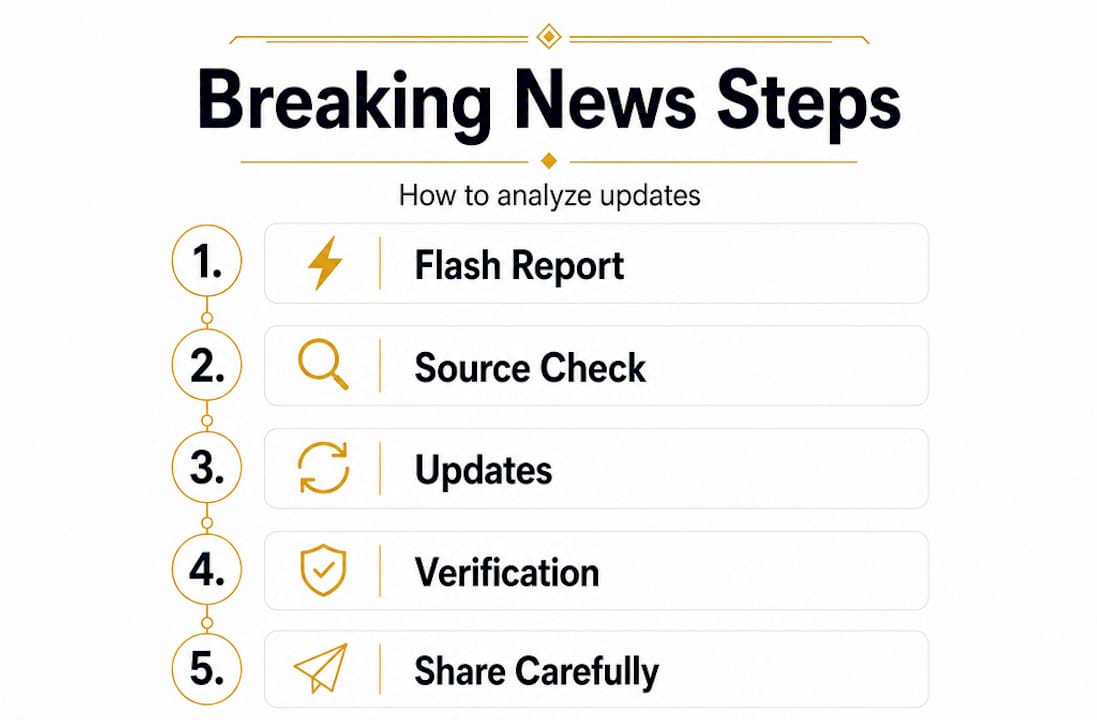
Understanding news cycles is part of this process. Breaking news typically follows a pattern: initial flash report, rapid updates with new details, corrections to early errors, and then consolidation into a definitive narrative. Recognizing which stage a story is in tells you how much trust to place in current reporting.
Pro Tip: Emotionally charged headlines are a signal to slow down, not speed up. Viral news mechanics show that emotionally provocative framing spreads faster regardless of accuracy. When a headline produces a strong reaction, that is the moment to verify most carefully.
Common pitfalls when following breaking news
Even well-informed readers fall into predictable traps when consuming breaking developments. Recognizing them is the first step toward avoiding them.
-
Treating social media as a primary source. Platforms like X and Facebook are effective for discovering that something is happening, but they are poor tools for understanding what is actually happening. Signal and noise appear simultaneously in social feeds, and there is no editorial filter separating them.
-
Reacting to headlines without reading the article. Headlines are written for clicks and brevity. They frequently omit context that changes the meaning of a story entirely.
-
Anchoring to the first report. The first version of a breaking story is almost always incomplete. Anchoring to early details, and then dismissing corrections as contradictions, is a common source of ongoing misinformation.
-
Ignoring local and community-level sources. For events like severe weather or localized emergencies, community-level updates from local authorities often contain more granular, actionable information than national coverage.
-
Conflating volume with verification. Seeing the same claim repeated across many outlets does not confirm it. Multiple outlets often source from the same wire report, creating the illusion of independent confirmation.
How to verify breaking news before sharing or acting
Verification is not the same as fact-checking after the fact. It is an active practice applied in real time before you share information or make decisions based on it.
| Verification method | When to use it | Reliability level |
|---|---|---|
| Official agency statement | Emergency events, government policy, weather alerts | Very high |
| Cross-referencing major outlets | Any significant story with national implications | High |
| Reverse image or video search | When visual content is used as evidence | High for media authenticity |
| Fact-checking organizations | Viral claims with no clear original source | Moderate to high |
| Timestamp and byline check | Every report, regardless of source | Essential baseline |
For weather emergencies specifically, the NOAA convective outlooks include probability estimates and update times that allow direct comparison against secondary coverage. That comparison alone can reveal whether a media report is current or based on outdated agency data.
Pro Tip: When verifying visual content from breaking events, paste the image URL into a reverse search tool before accepting it as current evidence. Images from unrelated events are routinely recirculated during crises.
My take on mastering breaking news in 2026
I've watched how people consume breaking news for years, and the single most common mistake I see is treating speed as the goal. Getting information first is only useful if that information is accurate. In my experience, the readers who stay best informed are not the ones refreshing feeds constantly. They are the ones who have built reliable source habits in advance and apply a consistent verification process regardless of how urgent a story feels.
The skill of understanding news beyond the headline is not glamorous, but it pays off in one concrete way: your decisions, whether financial, professional, or personal, are grounded in what actually happened rather than what was initially reported. That gap between initial report and confirmed fact is where most misinformation lives. Patience and source discipline close it.
I'd also encourage skepticism toward any outlet, regardless of political leaning, that frames every breaking event as catastrophic or world-changing within the first hour of reporting. The daily news briefing discipline that professional journalists apply exists for this reason. Structured sourcing produces better information than reactive coverage.
— Trevor
Stay informed with Thexreporter
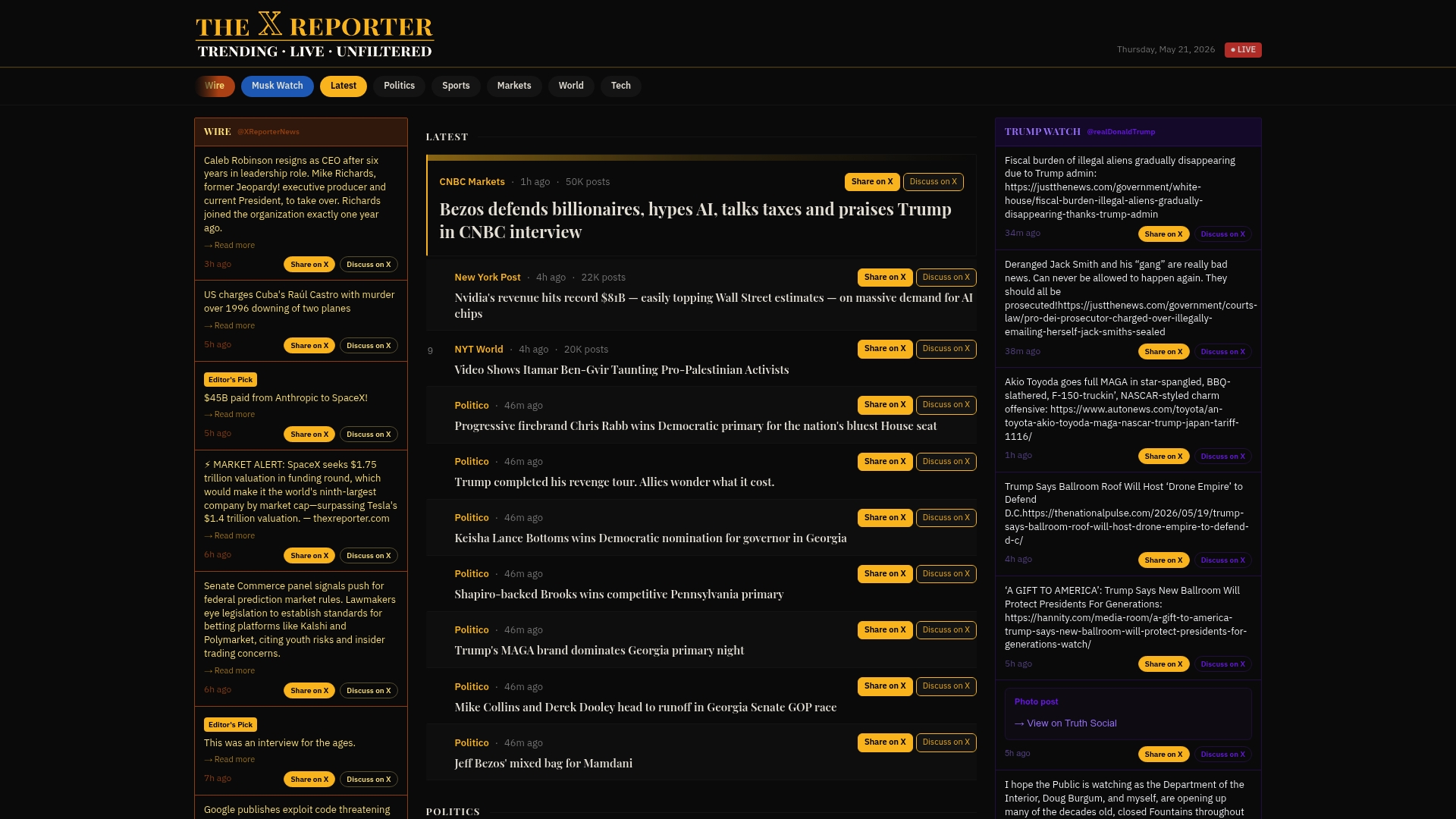
Thexreporter is built specifically for readers who want reliable, contextual breaking news without the noise. The platform aggregates trending stories across politics, technology, and markets, presenting them with editorial summaries that explain not just what happened but why it matters. Rather than forcing you to sort through dozens of raw feeds, Thexreporter distills the most significant updates into clear, digestible formats. For anyone who needs to grasp the latest developments quickly and accurately across multiple sectors, it offers a structured alternative to the chaos of unfiltered social feeds and fragmented wire reports. Visit the platform to see live, trending, and unfiltered coverage updated in real time.
FAQ
What is the best way to understand breaking news updates?
Start with official institutional sources for confirmed facts, then cross-reference with at least two independent news outlets. Apply a verification step before acting on or sharing any report.
How do news cycles affect the accuracy of breaking news?
News stories evolve rapidly after initial publication, with corrections and new details added as events develop. Early reports frequently contain errors that are resolved in subsequent updates.
Can push notifications help me stay on top of real-time news?
Yes, but only when configured selectively. Push notifications are most effective when limited to high-priority topics from trusted sources, reducing distraction while maintaining timely awareness.
Why is social media unreliable for breaking news verification?
Social platforms spread information faster than editorial filters can operate, meaning unverified claims circulate alongside confirmed facts. Use social feeds to detect that a story is developing, then move to vetted sources for confirmation.
How can I catch up on breaking news I missed?
A structured approach to catching up on missed news involves checking consolidated summaries from reputable aggregators rather than scrolling backward through raw feeds, which saves time and reduces exposure to outdated early reports.