

A news brief is a concise factual report designed to deliver timely updates on a specific issue, event, or development in the shortest possible format. Unlike formal press conferences or long-form investigative pieces, a news brief strips a story down to its core facts and presents them without commentary or narrative embellishment. Journalists, government agencies, and corporate communications teams all rely on this format to keep audiences informed quickly. Understanding what a news brief is, how it is structured, and how to read one critically gives you a measurable advantage in processing the daily flow of information.
What is a news brief and how is it structured?
A news brief, also called a news summary or news item in some editorial contexts, answers the Five Ws and H: Who, What, When, Where, Why, and How. This principle is the neutral foundation that allows a reader to grasp the essence of a story in seconds. Every element in the brief exists to serve those six questions. Nothing more is required.
The standard news brief format includes the following components:
- Headline: A short, factual title that signals the story's subject without sensationalism
- Lead paragraph: One to two sentences covering the most critical facts, typically Who and What
- Supporting detail: One short paragraph adding When, Where, Why, and How
- Quote (optional): A single attributed statement from a relevant source, included without editorial framing
- Source attribution: The originating agency, official, or publication
A well-formed news brief rarely exceeds 200 words, which allows a reader to consume it in under two minutes. That length constraint is a feature, not a limitation. It forces writers to prioritize facts over narrative and eliminates the padding that slows comprehension in longer formats.
Briefings include no explicit commentary or opinion. Any evaluation is implicit and limited. This neutrality is what separates a news brief from an editorial, a column, or an analysis piece. The Associated Press Stylebook and Reuters Handbook of Journalism both reinforce this standard for wire-service briefs distributed to newsrooms globally.

Pro Tip: When writing a news brief, draft the headline last. Write the lead paragraph first to lock in the core facts, then write a headline that accurately reflects what you actually wrote rather than what you intended to write.
How does a news brief differ from a press release or news flash?
Confusion between news formats is common, and the distinctions matter for both writers and readers. Each format serves a different purpose and carries different expectations.
Press releases are typically 400 to 800 words with a narrative structure designed to generate media coverage. A news brief, by contrast, provides logistical or core facts without an embedded story pitch. The press release is written to persuade a journalist to cover something. The news brief is written to inform a reader directly.
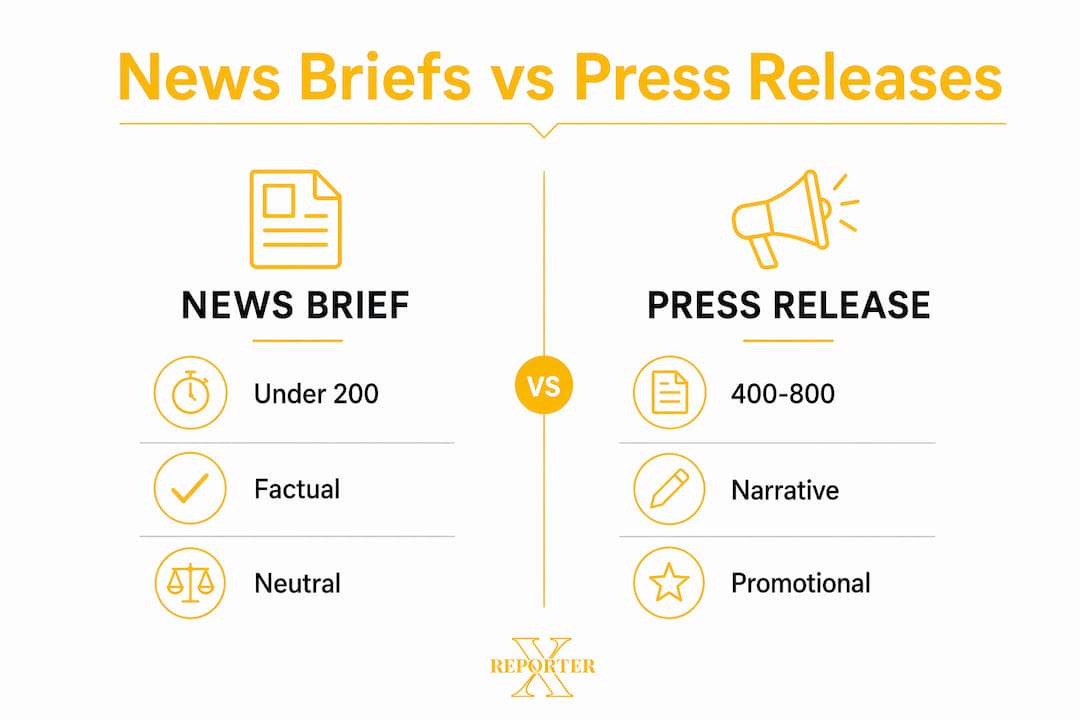
The table below summarizes the key differences across four common news formats:
| Format | Typical length | Primary purpose | Opinion included? |
|---|---|---|---|
| News brief | Under 200 words | Quick factual update | No |
| Press release | 400 to 800 words | Generate media coverage | Rarely |
| News flash | 1 to 3 sentences | Urgent breaking alert | No |
| News roundup | 500 to 1,000 words | Aggregate multiple stories | Occasionally |
A news flash differs from a brief primarily in urgency and scope. A flash is a single-sentence alert issued the moment a major event breaks. A brief follows once enough verified facts are available to construct a coherent summary. A news roundup, meanwhile, aggregates multiple stories across a time period and may include light editorial framing. The brief remains singular and factual throughout.
News briefings are less formal than press conferences and are often scheduled on a regular cadence for routine updates. Press conferences, by contrast, are convened for crises or major multi-stakeholder announcements. That distinction shapes how journalists prepare for and report from each setting.
Why news briefs matter and how to use them effectively
News briefs serve a specific and irreplaceable function in the information ecosystem: they deliver verified facts to large audiences in the least amount of time. For readers managing heavy information loads across politics, markets, and technology, a well-written brief is the most efficient entry point into any story.
The real value of a news brief, however, depends entirely on how you use it. Follow these four practices to get the most from every brief you read:
- Treat the brief as a trigger, not a conclusion. Use the facts presented to identify which stories warrant deeper research. A brief on a Federal Reserve rate decision, for example, should prompt you to read the full FOMC minutes, not replace them.
- Maintain a question log. Active reading strategies like writing down one unanswered question per brief transform passive consumption into sustained inquiry. This habit measurably improves comprehension and retention.
- Check the source attribution. A brief without a named source, timestamp, or originating agency carries lower credibility. Verify the provenance before acting on the information.
- Build a personal archive. Saving briefs on recurring topics, such as inflation data or geopolitical developments, creates a searchable knowledge base that provides context as stories evolve over weeks and months.
Readers consume only about 50% of content in news briefings on average, which means passive reading leaves half the available information unprocessed. Active engagement closes that gap. Platforms like Thexreporter structure their editorial summaries to support this kind of active, layered reading by pairing each brief with contextual framing.
Pro Tip: Set a two-minute timer when reading a news brief. If you finish before the timer ends, use the remaining time to write one follow-up question. That single habit compounds into significantly deeper news literacy over time.
Challenges of consuming news briefs in a digital environment
Digital distribution has expanded access to news briefs while simultaneously introducing new risks for readers. Three specific challenges deserve attention.
- Algorithmic filtering: Recommendation systems on social platforms prioritize engagement over completeness. A reader who relies solely on algorithmically delivered briefs receives a curated slice of the news cycle, not a representative sample. This creates epistemic isolation without the reader's awareness.
- AI-generated summaries: AI-generated news summaries may omit nuance, hallucinate information, or compress quotes inaccurately. Before relying on any AI-produced brief, verify the original metadata: source, timestamp, and authorship. Editorial human review remains the most reliable check against these errors.
- Volume and superficiality: The sheer number of briefs available daily creates pressure to scan rather than read. Scanning produces recognition without comprehension. Readers who optimize news consumption by limiting their daily brief intake to a manageable number and reading each one fully make better-informed decisions than those who skim dozens.
Source credibility remains the most important filter. A brief from Reuters, the Associated Press, or a named government agency carries different weight than one from an unattributed aggregator. Knowing the difference is a baseline media literacy skill.
Key takeaways
A news brief is the most efficient format for factual information delivery, but its value depends on active reading, source verification, and deliberate follow-up.
| Point | Details |
|---|---|
| Core definition | A news brief is a factual, neutral report under 200 words answering Who, What, When, Where, Why, and How. |
| Format distinction | News briefs differ from press releases in length and intent, and from news flashes in urgency and scope. |
| Active reading | Maintaining a question log and personal archive transforms briefs from passive updates into learning tools. |
| Digital risks | AI-generated summaries and algorithmic filtering require readers to verify source, timestamp, and authorship. |
| Practical use | Treat every brief as a starting point for deeper research, not a complete account of any story. |
Why active reading is the skill most readers overlook
I have spent years tracking how people actually engage with news briefs versus how they think they engage. The gap is significant. Most readers believe they are informed after reading a brief. The data suggests they have processed roughly half of what was written and retained less. That is not a criticism. It is a structural problem with how briefs are consumed in a scroll-driven environment.
The fix is not to read more briefs. It is to read fewer briefs more deliberately. One brief read with a follow-up question and a source check delivers more genuine understanding than ten briefs scanned in sequence. I have found that building a simple archive, even a folder of saved links organized by topic, changes how you relate to recurring stories. You stop reading each brief in isolation and start reading it as one data point in a longer sequence. That shift is where real media literacy begins.
The formats themselves are not the problem. A well-written news brief from a credible outlet is one of the most efficient information tools available. The challenge is the habit layer around it. Build that layer deliberately, and the brief becomes genuinely useful rather than just another item processed and forgotten.
— Trevor
Stay informed with Thexreporter's daily news briefs
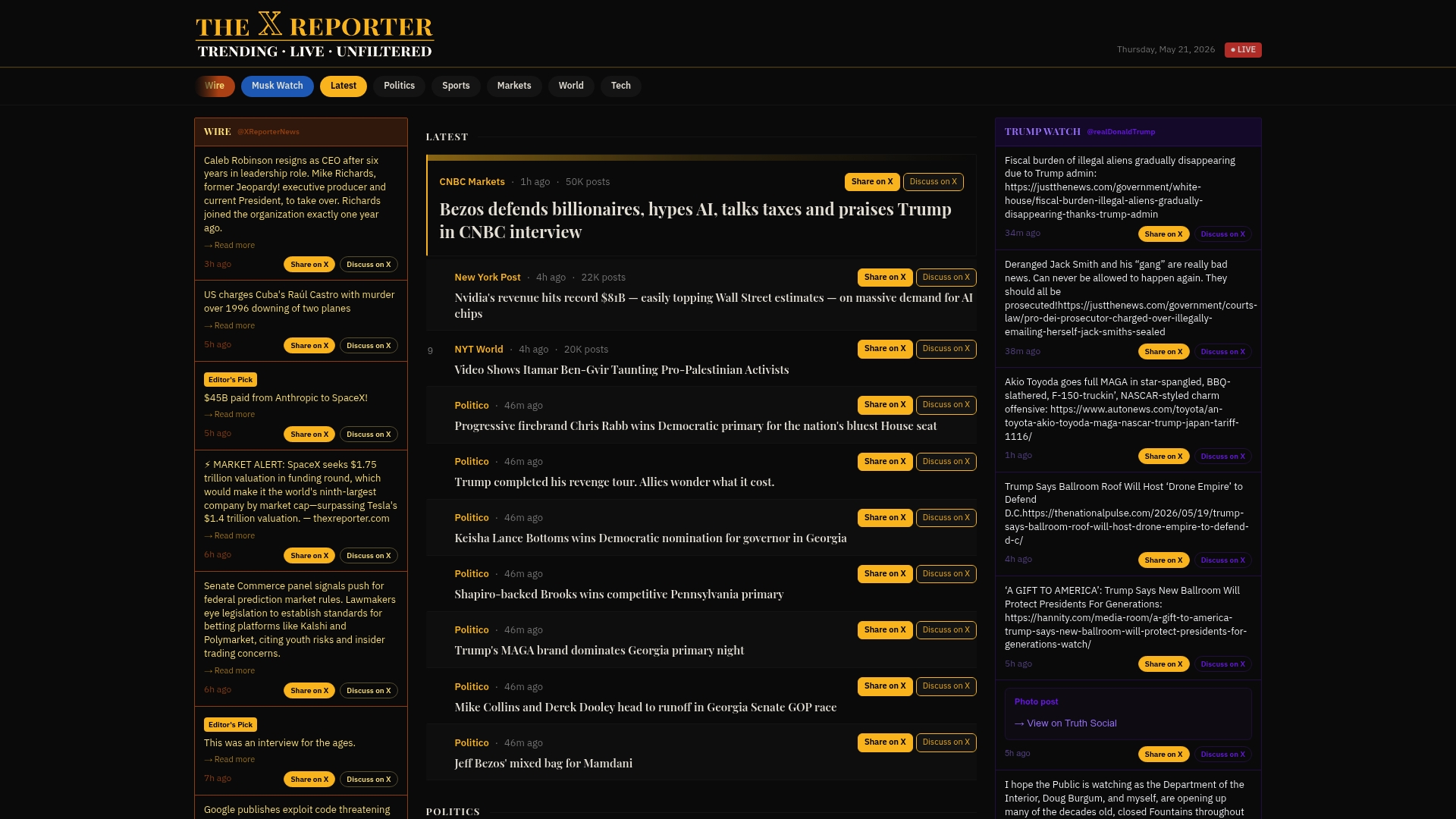
Thexreporter publishes live, unfiltered news briefs across politics, technology, and markets, updated throughout the day as stories develop. Each summary is editorially reviewed and structured to answer the core facts without opinion or filler. For readers who want reliable briefs they can act on rather than simply scroll past, Thexreporter provides the context and sourcing that transforms a quick read into an informed perspective. Visit Thexreporter to explore today's trending briefs and build the kind of consistent reading habit that keeps you genuinely current.
FAQ
What is a news brief in journalism?
A news brief is a short, factual report under 200 words that answers the Five Ws and H without opinion or commentary. It is used by journalists, agencies, and organizations to deliver timely updates quickly.
How long is a standard news brief?
A standard news brief rarely exceeds 200 words and is typically structured in one to two short paragraphs. This length allows consumption in under two minutes.
What is the difference between a news brief and a press release?
A press release runs 400 to 800 words and is designed to generate media coverage through narrative framing. A news brief provides core facts only and is written to inform readers directly, not to pitch a story.
How do I write a clear news brief?
Write the lead paragraph first, covering the most critical facts, then add one supporting paragraph for context. Keep the total under 200 words, use neutral language, and attribute every claim to a named source.
Are AI-generated news summaries reliable?
AI-generated summaries can omit nuance or compress quotes inaccurately. Always verify original metadata, including source, timestamp, and authorship, before relying on any AI-produced brief.