
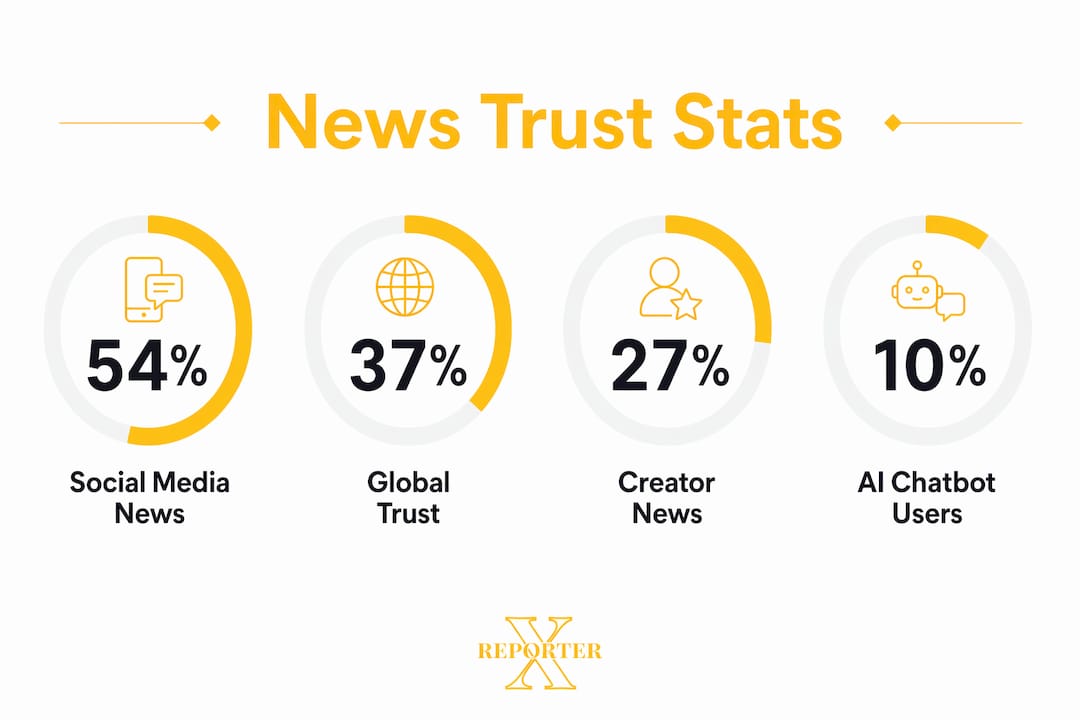
Social media news is now the dominant global news source, with 54% of people accessing news through social media and video platforms, surpassing television and print for the first time. That figure places Facebook, YouTube, Instagram, and TikTok ahead of every traditional outlet in reach. Three out of ten people globally cite social media as their main news source. Trust in legacy media continues to fall. The role of social media news is no longer emerging. It has arrived.
How does the role of social media news differ across platforms?
Each platform serves a distinct function in how people find and consume news. Understanding those differences explains why news consumption on social media does not follow a single pattern.
YouTube stands apart from every other platform. Its users intentionally seek news content, actively searching for coverage on specific topics. That behavior mirrors how people once used search engines or newspaper websites. On Facebook, Instagram, and TikTok, news arrives differently. Users encounter it while scrolling for other content. The news finds them, not the other way around.

TikTok's growth as a news source is the most dramatic shift in recent years. TikTok news usage among U.S. adults under 30 jumped from 9% in 2020 to 43% in 2026. That is a near fivefold increase in six years. Among all U.S. adults, 20% now use TikTok regularly for news. Short-form video has reshaped how younger audiences expect news to be delivered: fast, visual, and personality-driven.
Key platform distinctions worth tracking:
- YouTube: Active, intentional news seeking. Longer video formats. Broad age range.
- TikTok: Incidental discovery. Short-form video. Dominant among users under 30.
- Facebook: Passive exposure through feeds and shared links. Older demographic skew.
- Instagram: Visual storytelling. News encountered through Stories and Reels.
- X (Twitter): Real-time breaking news. High engagement from journalists and political commentators.
Pro Tip: If you want to understand how a news story is spreading, check X for real-time reaction, then check TikTok 24 hours later to see how it has been reframed for younger audiences. The two versions are often strikingly different.
What is the impact of social media news on public trust?
Global trust in news has reached a historic low. Only 37% of people globally say they trust most news most of the time. That figure represents a structural crisis, not a temporary dip. Trust in national news in the United States has dropped 11 points since March 2025 alone.
Social media amplifies this trust problem in a specific way. Users who consume news primarily through social platforms report higher levels of dissatisfaction and negativity about major news coverage. The algorithmic environment rewards outrage and conflict, which shapes what news gets seen and how it gets framed.
Journalists face a direct tension as a result. Editorial integrity versus algorithmic visibility is now a daily operational conflict for most newsrooms. A story that follows rigorous sourcing standards may reach far fewer people than a simplified or sensationalized version of the same event.
Content creators have filled part of the gap left by declining trust in traditional outlets. 27% of people now get news via creators, rating them higher on relatability and accessibility than traditional journalists. The trade-off is impartiality. Audiences rate creators significantly lower on neutrality and factual rigor.
| Source Type | Relatability | Perceived Impartiality |
|---|---|---|
| Traditional news outlets | Lower | Higher |
| Social media content creators | Higher | Lower |
| AI chatbot news summaries | Neutral | Unestablished |
Pro Tip: Cross-reference any news story you find through a creator with a primary source or established outlet before sharing it. Creators excel at accessibility, not verification.
How are AI chatbots and video changing news distribution?
AI chatbots have entered the news consumption cycle faster than most analysts predicted. Global weekly AI chatbot news usage reached 10% in mid-2026, up from 7% the previous year. Among users under 35, adoption is significantly higher. Tools like ChatGPT and Perplexity are now functioning as news intermediaries, summarizing events and answering follow-up questions in real time. You can track this trend further through AI in news consumption analysis at Thexreporter.
Video is the dominant format for news delivery on social platforms. 77% of people globally watch online news videos at least once a week. That figure reflects a fundamental shift in how information is packaged and received. Text-based articles are losing ground to video summaries, explainers, and live streams.
Traditional publishers face a structural problem here. Their investments in proprietary video content are not generating the returns they expected. Audiences prefer watching news videos on YouTube, TikTok, and Instagram rather than on publisher-owned websites. The decline of news websites reflects this directly: traffic to news apps and websites fell 5% between 2023 and 2026.
The economics of this shift are significant:
- Publishers lose direct audience relationships when readers consume content on third-party platforms.
- Advertising revenue follows the audience, moving from publisher sites to platform ecosystems.
- Short-form video compresses complex stories, raising accuracy and context concerns.
- AI summaries further reduce the need to visit original source material.
How does social media news shape public opinion and civic life?
Social media news consumption correlates directly with civic and political participation, both online and offline. People who regularly engage with news on social platforms are more likely to comment, share, sign petitions, and attend public events. The interactive nature of these platforms transforms news consumption from a passive act into a participatory one.
This dynamic has measurable consequences for democratic life. Younger generations who get their news primarily through TikTok and Instagram are developing political awareness through formats that prioritize emotion and narrative over policy detail. That shapes what issues gain traction and which voices get amplified.
The risks are real and documented. Misinformation spreads faster on social platforms than corrections do. Algorithmic filtering creates information environments where users see news that confirms existing beliefs. Understanding how news goes viral helps explain why false stories often outperform accurate ones in reach and engagement.
Content creators play a specific role in civic engagement. By making news accessible and relatable, they draw in audiences who would not engage with traditional outlets. That broadens participation. The concern is that relatability without rigor can distort public understanding of complex issues.
Key takeaways
Social media and video platforms are now the primary global news source, and that shift is reshaping trust, journalism, and civic engagement simultaneously.
| Point | Details |
|---|---|
| Social media leads news globally | 54% of people access news via social media and video platforms, surpassing TV and print. |
| Platform behavior varies significantly | YouTube users seek news actively; TikTok and Facebook users encounter it incidentally. |
| Trust in news is at a historic low | Only 37% of people globally trust most news most of the time, a structural crisis. |
| AI and video are reshaping delivery | 77% watch online news videos weekly; AI chatbot news use reached 10% globally in 2026. |
| Civic engagement is directly affected | Social media news consumption correlates with both online and offline political participation. |
Why the social media news debate misses the real issue
I have spent years watching analysts frame social media news as either a threat or an opportunity. Both framings miss the point. The real issue is that audiences have made a rational choice. Traditional outlets became slower, more expensive to access, and less responsive to what readers actually wanted to know. Social platforms filled that gap.
The trust crisis is real, but it is not caused by social media alone. Declining trust in institutions broadly, including government and finance, has transferred to the news organizations that cover them. Social media accelerated that decline by making the gap between official narratives and ground-level reality visible in real time.
What I find genuinely concerning is not that people get news from TikTok. It is that digital literacy has not kept pace with the speed of information. Most people do not know how to evaluate a source, identify a conflict of interest, or recognize when a creator is being paid to frame a story a certain way. That is the problem worth solving.
Journalists who adapt to social platforms without abandoning verification standards are doing the most important work in media right now. They are not choosing between integrity and reach. They are proving the two can coexist.
— Trevor
Stay ahead of the news cycle with Thexreporter
The shift in how news is consumed requires a source that keeps pace without sacrificing accuracy. Thexreporter delivers concise editorial summaries across politics, technology, and markets, giving you the context that social media feeds rarely provide.
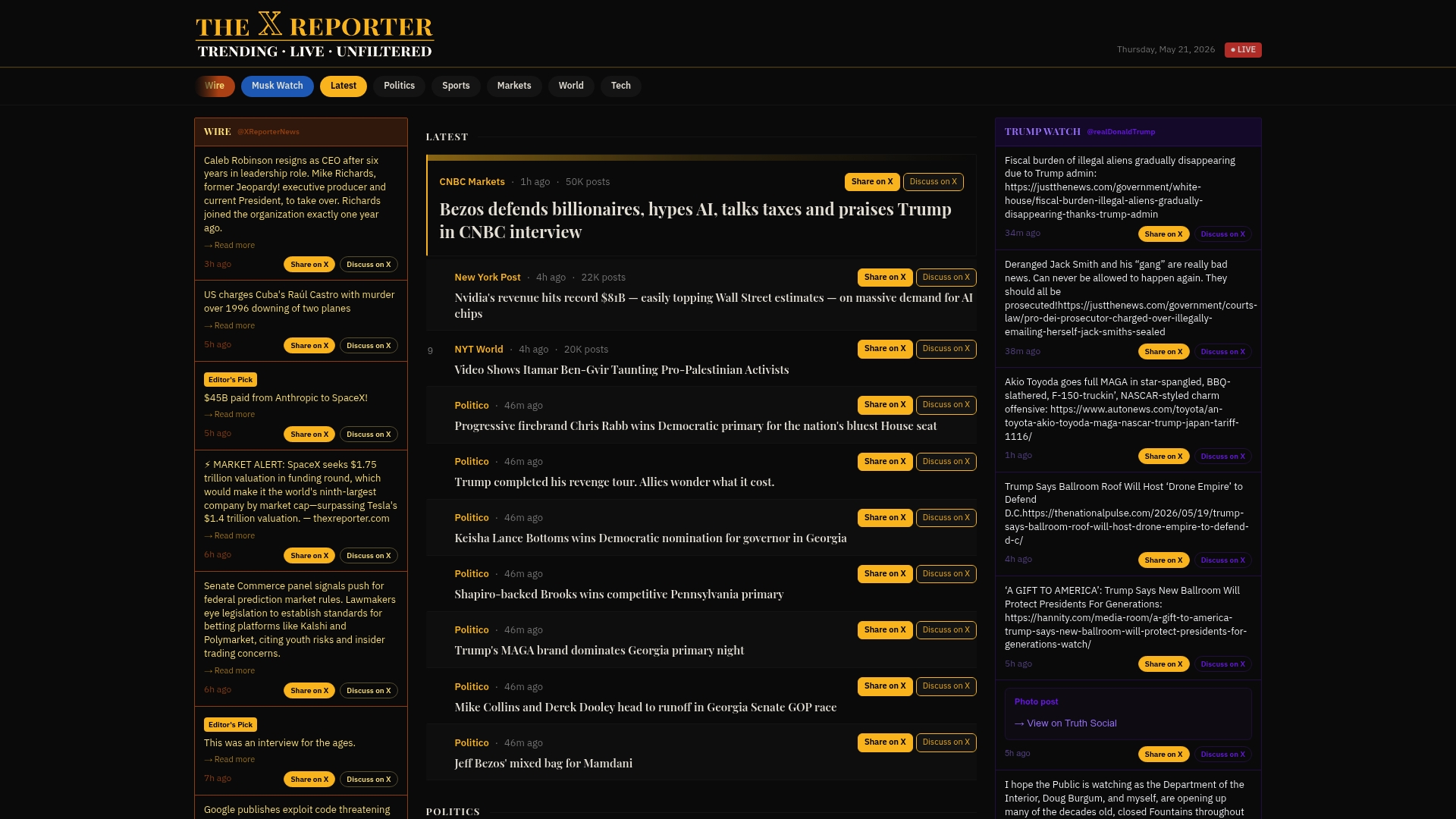
Whether you are tracking a breaking political development or a market-moving announcement, Thexreporter distills the signal from the noise. The platform is built for readers who want to stay informed without spending hours parsing conflicting social media posts. Visit Thexreporter to explore current coverage and see how structured news analysis compares to the fragmented feeds most people rely on today.
FAQ
What is the role of social media in news consumption today?
Social media and video platforms are now the leading global news source, used by 54% of people worldwide. Three in ten people cite social media as their primary news source.
How does TikTok compare to YouTube for news?
TikTok users mostly encounter news incidentally while scrolling, while YouTube users actively search for news content. TikTok news use among U.S. adults under 30 reached 43% in 2026, up from 9% in 2020.
Why is trust in news declining?
Only 37% of people globally trust most news most of the time, a historic low. Social media environments that reward engagement over accuracy have accelerated this decline.
How do AI chatbots fit into the news ecosystem?
AI chatbots like ChatGPT and Perplexity now function as news intermediaries, with 10% of people globally using them for news weekly as of mid-2026. Adoption is highest among users under 35.
Does social media news affect civic engagement?
Social media news consumption correlates with higher rates of civic and political participation, both online and offline. The interactive nature of platforms turns passive news reading into active public discourse.