

Evening news roundups are defined as professionally curated, concise summaries of the day's top stories, designed to deliver maximum information in minimum time. Platforms like PBS News Wrap, BBC News Summary, and Prediction News Network have made this format the standard for busy readers who need a reliable current events summary without spending hours scanning multiple outlets. When you read evening news roundups consistently, you gain a structured view of politics, technology, and markets in a single sitting. This guide covers the key formats, credibility checks, and reading methods that make nightly news briefings genuinely useful.
What formats and platforms deliver the best evening news roundups?
Professional evening news roundups appear in three primary formats: audio, text-based aggregation, and video. Each serves a different reading context, and knowing which to use when determines how much value you extract from your daily news highlights.
Audio summaries are the most time-compressed format. BBC News Summary produces two-minute audio wraps updated on a regular, often hourly, basis. That means a listener can absorb a full global news cycle in less time than it takes to brew coffee.

Text-based aggregators offer the highest information density. Prediction News Network aggregates 206 stories from 19 outlets in a three-hour window, giving readers a structured catalog of top news stories across categories. This format is best for readers who want to scan broadly and then drill into specific topics.
Video updates from CBS News Evening Update and PBS News Wrap provide editorial context alongside visuals, which aids comprehension for complex legislative or economic stories. PBS, for example, covered the Senate's passage of a $70 billion immigration enforcement bill with full legislative background, not just the headline figure.
Here is a quick comparison of the three main formats:
| Format | Best for | Time required | Example source |
|---|---|---|---|
| Audio summary | Commuting, multitasking | 2 to 5 minutes | BBC News Summary |
| Text aggregator | Broad scanning, research | 5 to 15 minutes | Prediction News Network |
| Video update | Context and analysis | 10 to 20 minutes | PBS News Wrap, CBS Evening Update |
For mobile users, NPR's app and podcast feed deliver nightly news briefings on demand. Apps like Apple News and Google News aggregate top news highlights from multiple outlets, though they lack the editorial curation of dedicated roundup services.
How do you identify credible evening news sources?
Credibility is the single most important filter when selecting a nightly news briefing. Clickbait journalism and machine-generated content risk misleading readers, and the risk is growing as automated content farms scale their output. A roundup that looks comprehensive can still be built on shallow or fabricated reporting.
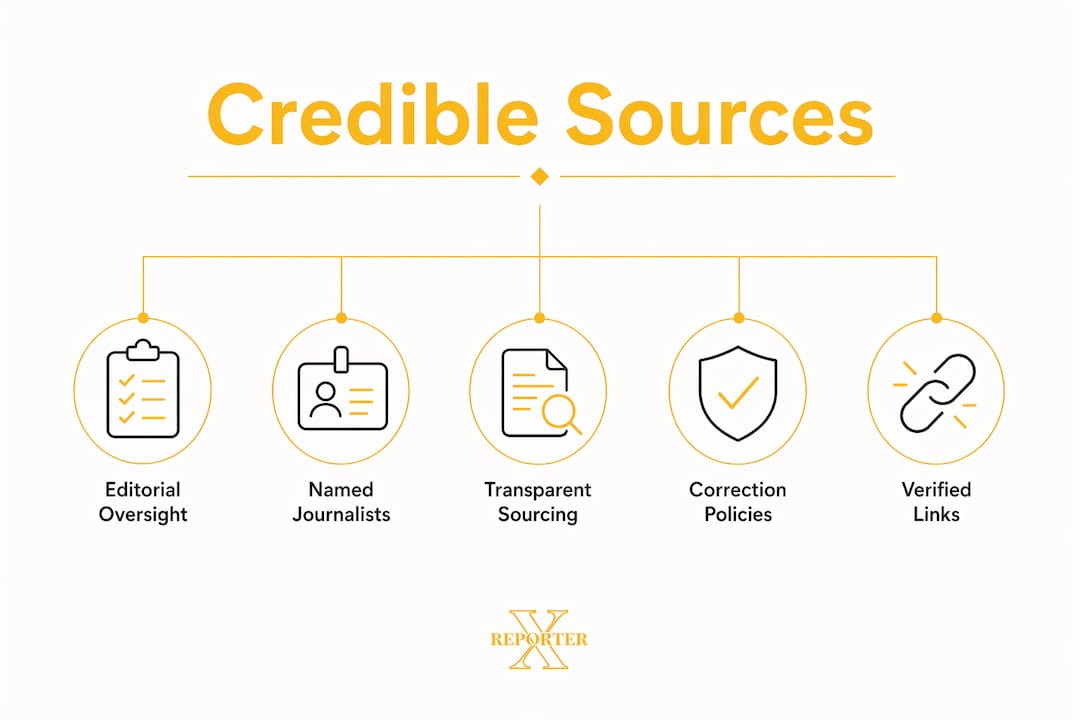
The markers of genuine editorial oversight include named journalists, transparent sourcing, and correction policies. Outlets like PBS, BBC, and NPR publish editorial standards publicly and employ editors who verify claims before publication. That accountability structure is absent from most algorithm-driven aggregators.
Automated content farms often mask their activity with plausible bylines and recurring keywords, so surface-level credibility is not sufficient. Readers must check publication history, look for consistent authorship, and cross-reference major claims against a second outlet.
Key signals of a trustworthy roundup source:
- Named editors or journalists with verifiable track records
- Clear sourcing links back to primary reporting
- A published corrections policy or editorial standards page
- Consistent publication schedule, not just reactive posting
- No revenue model built exclusively on ad clicks per headline
Pro Tip: When a headline triggers a strong emotional reaction, open the primary source link before sharing or acting on the story. Emotional framing is the most common technique used by low-quality content to drive engagement.
Journalism experts recommend prioritizing editorial oversight and verified sources to avoid shallow machine-generated content. That recommendation applies equally to text roundups and audio wraps.
How to extract maximum value from a latest news roundup
Professional aggregators design roundups with a tiered reading hierarchy: a brief top-headlines segment for immediate scanning, followed by a full headline list, and then a detailed breakdown by topic accessible through direct source links. Matching your reading depth to your available time is the core skill.
Follow this numbered approach for any evening news analysis session:
- Start with the 30-second cut. According to Prediction News Network, a top headlines summary is the most effective way to quickly gain a baseline understanding of current events each evening. Read or listen to the top three to five headlines before anything else.
- Scan the full headline list by category. Group stories mentally into politics, technology, and markets. This takes two to three minutes and reveals which sectors had significant movement that day.
- Select two to three stories for deeper reading. Follow the source links for stories directly relevant to your work, investments, or civic interests. Avoid the trap of reading every linked article.
- Note any stories that connect local events to national trends. Connecting local events to national trends helps distinguish between fleeting news and significant developments. This context separates high-quality roundups from simple headline lists.
- Close the session with a fixed time limit. Set a timer for 10 to 15 minutes. Unlimited browsing converts a focused briefing into passive scrolling.
Here is a practical guide to matching reading depth with time investment:
| Time available | Recommended approach | Depth level |
|---|---|---|
| 30 seconds | Top headlines only | Surface |
| 2 to 5 minutes | Full headline scan by category | Moderate |
| 10 to 15 minutes | Headline scan plus 2 to 3 full stories | Deep |
| 20 or more minutes | Full roundup plus primary source links | Comprehensive |
For readers who want to catch up on missed news fast, the tiered approach prevents the common mistake of spending 45 minutes on one story while missing 20 others.
How to build a sustainable daily news routine
A daily news habit works best when it is scheduled, not reactive. Reading a latest news roundup at a fixed time each evening creates a clear boundary between active news consumption and passive scrolling throughout the day.
Practical steps for building a consistent routine:
- Set a fixed evening window. Between 7 and 9 PM works for most schedules. This timing allows the day's major stories to be fully reported before you review them.
- Pair evening roundups with a morning briefing. Morning briefings from NPR or The New York Times provide forward-looking context. Evening summaries close the loop on how those stories developed. Together, they give you a full-day perspective.
- Use podcast subscriptions for passive intake. NPR's Up First and BBC Global News Podcast deliver audio briefings that work during commutes or exercise, extending your news intake without adding screen time.
- Limit notifications to one trusted source. Push notifications from multiple apps create fragmented, anxiety-driven news consumption. Choose one outlet for breaking alerts and read everything else in your scheduled session.
Pro Tip: If you finish an evening roundup feeling more anxious than informed, the source is likely optimizing for engagement rather than clarity. Switch to a text-based aggregator with neutral editorial framing.
Optimizing news consumption for decision-making requires balancing information depth with mental energy. News fatigue is a documented response to high-volume, high-intensity coverage. A structured routine reduces that cognitive load significantly. For readers focused on technology developments, a dedicated resource on following technology news in 2026 provides additional platform-specific guidance.
Key takeaways
Efficient evening news consumption requires a tiered reading method, credible source selection, and a fixed daily schedule to avoid both information gaps and news fatigue.
| Point | Details |
|---|---|
| Use the tiered reading method | Start with the 30-second headline cut, then scan by category before drilling into specific stories. |
| Verify source credibility | Prioritize outlets with named editors, transparent sourcing, and published editorial standards. |
| Match format to context | Use audio for commuting, text aggregators for broad scanning, and video for legislative or market context. |
| Schedule your reading session | A fixed 10 to 15 minute evening window prevents passive scrolling and reduces news fatigue. |
| Combine morning and evening briefings | Morning briefings provide forward context; evening roundups confirm how stories resolved. |
Why curated roundups matter more than ever
The volume of daily news output has made unstructured consumption genuinely counterproductive. I have watched readers spend an hour on a single political story while missing a market-moving Federal Reserve statement that ran the same evening. That imbalance is not a personal failure. It is the predictable result of platforms designed to maximize time-on-site rather than comprehension.
What I find most underappreciated is the role of geographic and thematic context in separating useful roundups from noise. A headline about regional violence means something different when placed alongside GDP data from the same country. Curators who provide that framing are doing real editorial work, and that work is increasingly rare. The outlets that still do it consistently, PBS, BBC, and a small number of independent aggregators, are worth protecting as reading habits.
The misinformation risk is real but manageable. Readers who apply a consistent verification standard, checking bylines, sourcing, and publication history before trusting a story, are far less vulnerable than those who rely on platform curation alone. The habit takes two minutes per session and compounds significantly over time.
— Trevor
Stay informed with Thexreporter
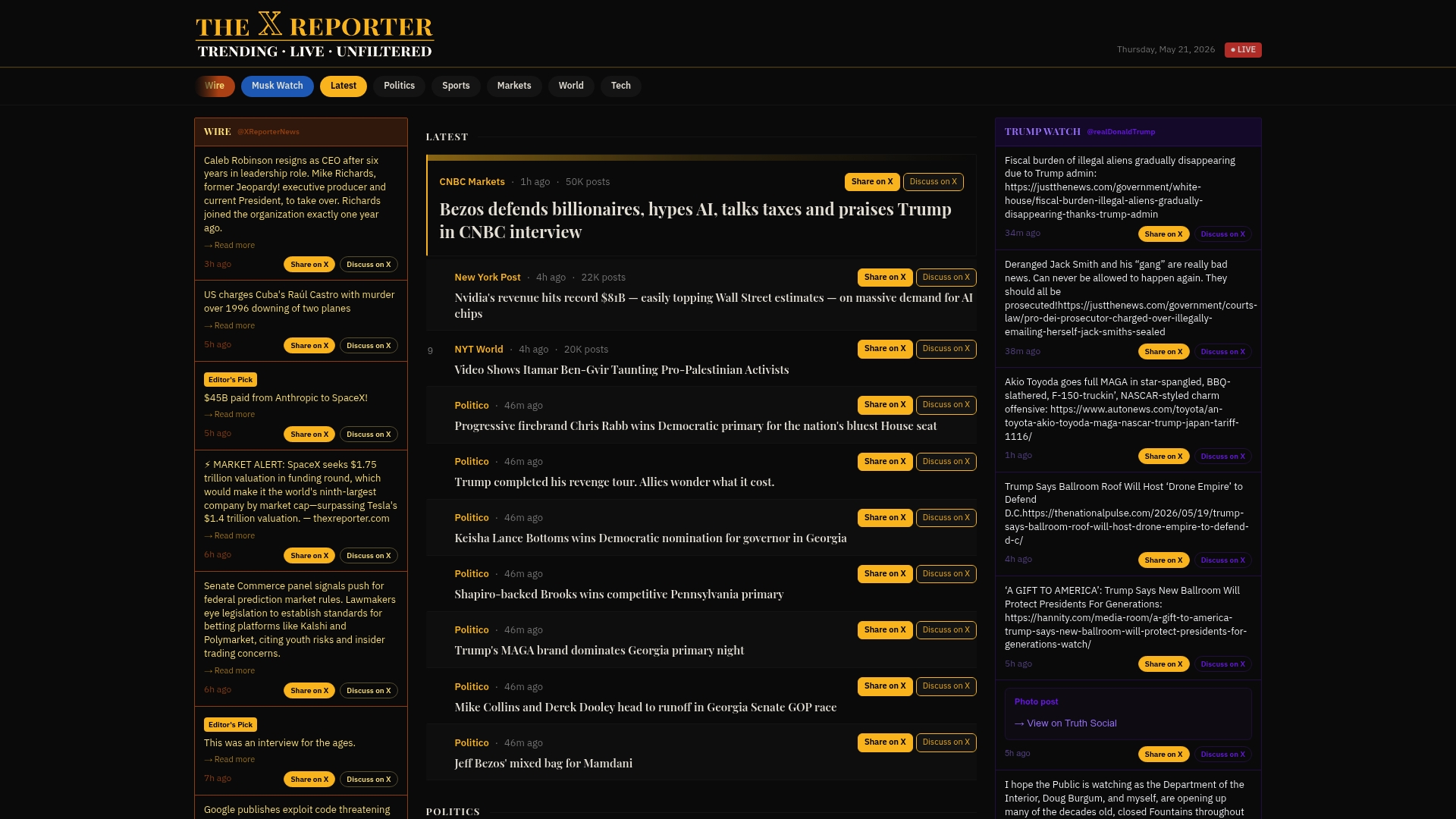
Thexreporter delivers curated editorial summaries across politics, technology, and markets, built specifically for readers who need clarity without volume. Each briefing is editorially reviewed, sourced from verified outlets, and structured to match the tiered reading method described in this article. Whether you are tracking a Senate vote, a Federal Reserve decision, or a major technology development, Thexreporter provides the context that raw headlines omit. Visit Thexreporter to access daily news highlights and evening summaries designed for informed, time-conscious readers.
FAQ
What is an evening news roundup?
An evening news roundup is a curated summary of the day's top stories across politics, technology, and markets, published or broadcast at the end of the news cycle. Platforms like PBS News Wrap and Prediction News Network are established examples of this format.
How long should it take to read a nightly news briefing?
A focused nightly news briefing takes between two and fifteen minutes depending on depth. The 30-second top headlines cut provides a baseline, while a full category scan with two to three linked stories fits within fifteen minutes.
How do I avoid misinformation in news roundups?
Check for named journalists, transparent sourcing, and a published editorial standards policy before trusting a roundup source. Automated content farms often use plausible bylines to appear credible, so publication history and cross-referencing are necessary verification steps.
What is the difference between a news aggregator and an editorial roundup?
A news aggregator collects headlines algorithmically from multiple sources without editorial judgment. An editorial roundup, such as those from PBS or BBC, applies journalist oversight to select, contextualize, and summarize the most significant stories of the day.
Can I use a podcast as my primary evening news source?
Yes. Audio formats like BBC News Summary and NPR's Up First deliver complete nightly news briefings in two to five minutes, making them a practical primary source for readers who prefer passive intake during commutes or exercise.