
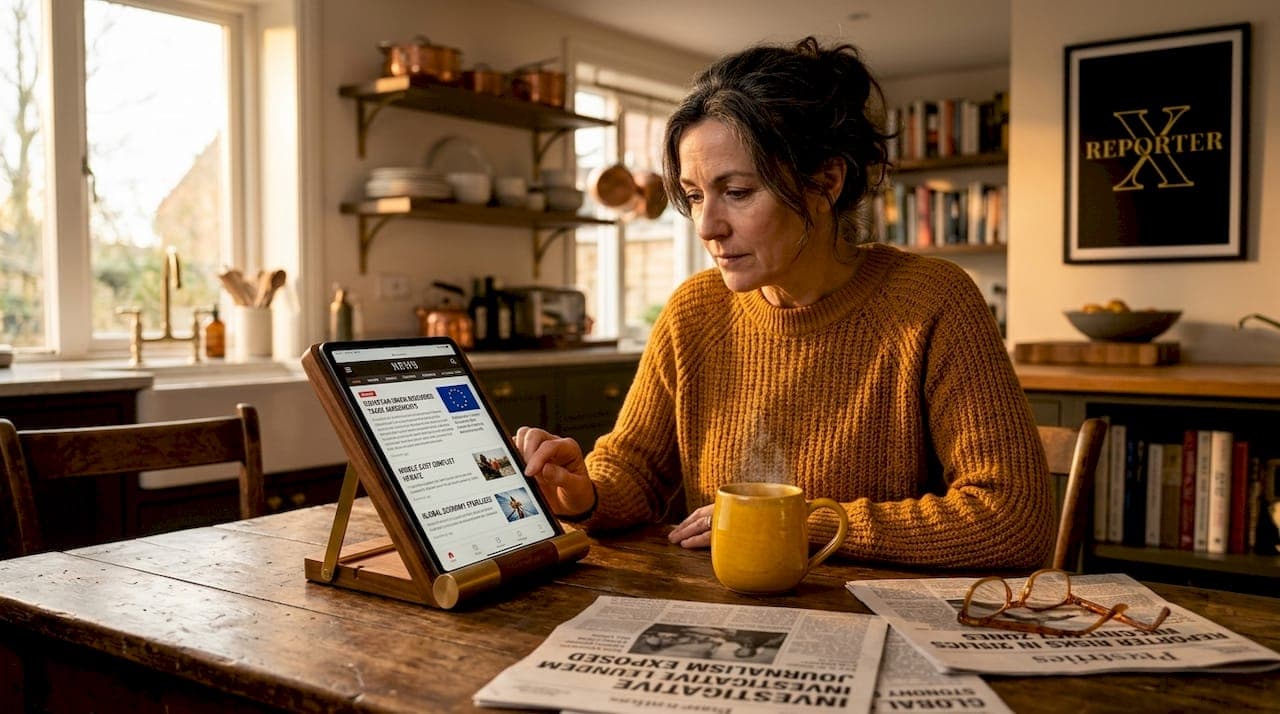
Reading international news daily is the practice of using structured databases, curated aggregators, and short-format audio to monitor global headlines, politics, and cultural developments across multiple regions in a single consistent session. Platforms like Factiva, PressReader, and Access World News have replaced the old habit of visiting dozens of individual outlets. The Daily World Brief podcast adds an audio layer for time-pressed readers. Done with a repeatable workflow, daily global news consumption takes under 30 minutes and delivers far broader coverage than any single publication can provide.
What essential tools and platforms enable daily international news reading?
Research databases like Access World News, Factiva, and PressReader allow you to read international news daily without manually searching dozens of outlets. Each platform aggregates content from hundreds of international newspapers, covering material from the late 20th century to the present. That depth matters because breaking stories often require historical context that a single homepage cannot supply.
The three platforms differ in meaningful ways:
- Factiva (Dow Jones): Full-text search across thousands of global publications. No images, no print layout. Optimized for keyword-driven research and financial news tracking.
- Access World News (NewsBank): Strong regional and local international coverage. Useful for tracking stories in countries that major Western outlets underreport.
- PressReader: Browsable "as printed" visual format that replicates the newspaper page on screen. Supports multiple languages and works well on mobile.
| Platform | Format | Best for | Language support |
|---|---|---|---|
| Factiva | Full-text only | Keyword research, financial news | English-primary |
| Access World News | Full-text | Regional and local global coverage | Multilingual |
| PressReader | As-printed visual | Browsing, mobile reading | 60+ languages |
For audio, The Daily World Brief podcast delivers concise recaps of major global stories in short daily episodes. It avoids the scroll-and-click fatigue that comes with text-heavy platforms. Treat it as a morning primer before you open any database.
Pro Tip: If you have institutional access through a university or library, PressReader and Factiva are often available at no personal cost. Check your library card benefits before subscribing.
How to create a repeatable daily workflow for reading international news
A structured workflow is what separates readers who stay consistently informed from those who catch up sporadically. Defining fixed daily queries focused on three to five regions and two or three recurring themes, such as trade policy or election cycles, is the most efficient method for cross-platform searching. This approach removes decision fatigue and keeps each session focused.
A practical daily workflow looks like this:
- Start with audio. Play The Daily World Brief during your commute or morning routine. This gives you the top five to seven global stories before you open a single browser tab.
- Run your saved queries. In Factiva or Access World News, use pre-saved searches for your target regions. Scan headlines first, then read full text only for stories that require deeper understanding.
- Browse PressReader for visual context. Spend five to ten minutes on PressReader's front pages from two or three international papers. The print layout surfaces stories that keyword searches miss.
- Check push notifications. Push notifications and news roundups from trusted aggregators fill gaps between your scheduled sessions. Set alerts only for high-priority topics to avoid notification overload.
- Log notable stories. Keep a simple running document or note with three to five stories per day. This builds pattern recognition over weeks and sharpens your understanding of long-running global events.
Pro Tip: Schedule your daily session at the same time each day, ideally before 9 a.m. Morning reading aligns with the news cycle and means you start work already briefed on overnight developments in Asia, Europe, and the Americas.
Combining reading and listening is particularly effective for busy professionals. Audio handles the broad sweep; text handles the depth. You can review a daily news briefing checklist to refine which story categories deserve your daily attention.

What are the best practices and common pitfalls in staying updated on global news?
The biggest risk in daily international news consumption is not ignorance. It is overload. Limiting sources and cross-checking news across multiple outlets protects against both misinformation and the cognitive fatigue that causes readers to disengage entirely. Three to five trusted platforms is a manageable ceiling for most readers.
Common pitfalls to avoid:
- Single-source dependency. Relying on one outlet, even a reputable one, introduces blind spots. Regional stories in Southeast Asia or sub-Saharan Africa are systematically underreported by Western wire services.
- Headline-only reading. Global news headlines give you the what but rarely the why. Allocate time for at least two full-text articles per session to maintain analytical depth.
- Ignoring format diversity. Text, audio, and visual formats each surface different stories. A print-layout browse on PressReader will show you a story that a keyword search in Factiva never returns.
- Alert fatigue. Subscribing to too many push notifications trains you to ignore them. Curate alerts to five topics maximum and review the settings monthly.
Understanding the types of international news stories available, from hard political reporting to cultural features, helps you build a more balanced daily diet. Political and economic news dominates most aggregators, but cultural and social stories provide the context that makes political developments legible.
How do different formats and devices affect your news reading experience?
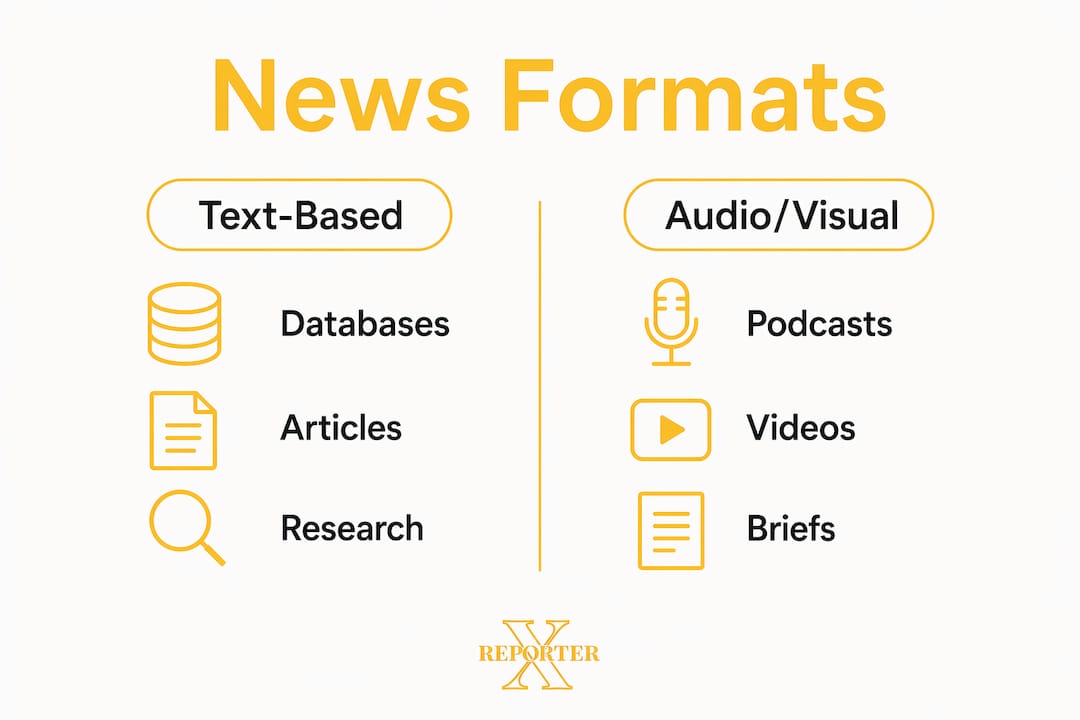
Format and device choice directly determine how much information you retain and how long you sustain the habit. PressReader's "as printed" layout improves scanning speed because the visual hierarchy of a newspaper page guides the eye naturally. Factiva's full-text format supports precision keyword searching but demands more active effort to browse, particularly on smaller screens.
| Format | Device fit | Speed | Depth |
|---|---|---|---|
| As-printed (PressReader) | Mobile, tablet | Fast scanning | Moderate |
| Full-text (Factiva) | Desktop | Slower browsing | High |
| Audio (podcast) | Mobile, wearable | Fastest | Low to moderate |
Mobile consumption favors visual and audio formats. Desktop consumption favors full-text databases where you can run complex queries and open multiple tabs. Consuming different formats across devices is not redundancy. It is a deliberate strategy for processing information at different levels of depth throughout the day. Audio in the morning, text at a desk, and a visual browse before bed creates a layered understanding that no single format achieves alone. Understanding how push notifications reach your device also helps you configure alerts that complement rather than interrupt your reading sessions.
Key takeaways
The most effective way to read international news daily is to combine a structured database workflow with audio briefs and format-aware device choices across three to five trusted sources.
| Point | Details |
|---|---|
| Use aggregation databases | Factiva, Access World News, and PressReader each cover what the others miss. |
| Add audio to your routine | The Daily World Brief delivers the day's top global stories before you open a browser. |
| Define fixed daily queries | Pre-saved searches for three to five regions eliminate decision fatigue each session. |
| Limit and cross-check sources | Cap trusted sources at five and verify major stories across at least two outlets. |
| Match format to device | Use visual formats on mobile, full-text on desktop, and audio during transit. |
Why most people read global news wrong
I have spent years testing different approaches to daily international news consumption, and the pattern I see most often is this: readers default to whatever is easiest, which usually means one or two familiar English-language sites and a social media feed. That approach feels efficient but produces a narrow, algorithmically filtered picture of the world.
The shift that changed my own practice was treating international news reading like a professional research task rather than casual browsing. Pre-saved queries in Factiva, a fixed 25-minute morning window, and The Daily World Brief on the way to work produced more genuine global awareness in two weeks than months of scrolling ever did. The structure is not a constraint. It is what makes the habit sustainable.
The other mistake I see is abandoning depth for speed. Quick briefs are useful primers, not substitutes for full-text reading. If you only ever listen to audio summaries, you will know that something happened without understanding why. Pair the brief with at least one full article per day and your analytical grasp of current events around the world improves measurably over time.
— Trevor
Stay ahead with Thexreporter
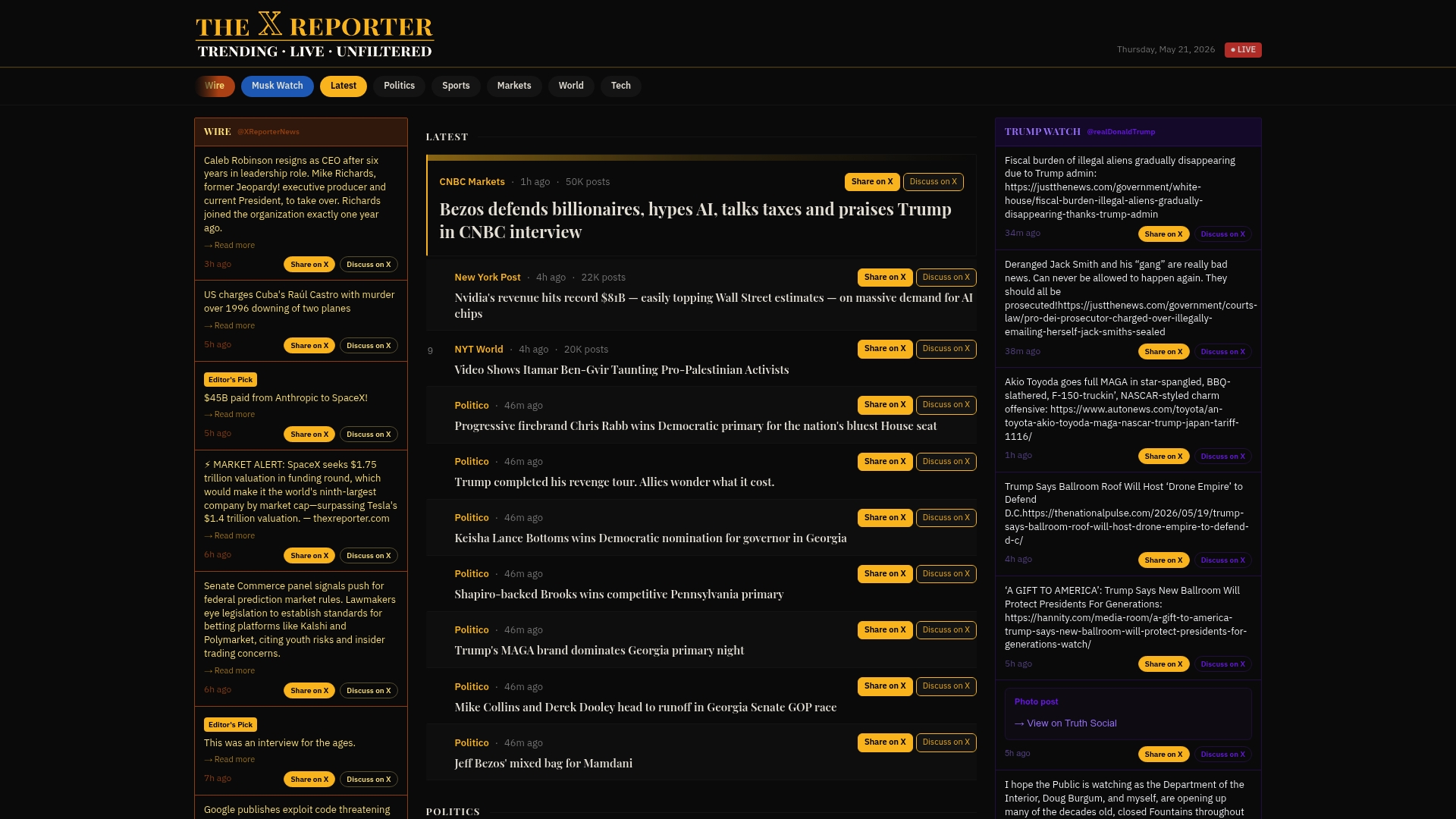
Thexreporter is built for readers who want global news headlines without the noise. The platform aggregates breaking stories across politics, markets, and technology into concise editorial summaries that give you context, not just facts. Whether you are tracking a developing geopolitical situation or monitoring market-moving policy decisions, Thexreporter delivers the signal clearly. Visit Thexreporter for live, trending, and unfiltered international coverage updated throughout the day. For readers who want to go deeper on source selection, the guide to global news alternatives covers additional platforms worth adding to your daily rotation.
FAQ
What is the easiest way to read international news daily?
Use a news aggregation database like PressReader or Access World News alongside a short-format podcast like The Daily World Brief. This combination covers both depth and speed without requiring you to visit multiple individual outlets.
How do I avoid information overload when following global news?
Limit your trusted sources to three to five platforms and set push notification alerts for no more than five priority topics. Cross-checking two outlets per major story is sufficient for accuracy without adding significant time.
What is the difference between Factiva and PressReader?
Factiva delivers full-text, keyword-searchable content without images, making it best for research-oriented reading on a desktop. PressReader replicates the visual newspaper layout and supports 60-plus languages, making it better suited for mobile browsing and casual scanning.
How long should a daily international news session take?
A focused session of 20 to 30 minutes, combining a morning audio brief with pre-saved database queries, is sufficient for broad daily coverage. Longer sessions are warranted only when a specific story requires deeper research.
Why should I subscribe to international news databases instead of free sites?
Free news sites are subject to paywalls, algorithmic curation, and geographic content restrictions. Databases like Access World News and Factiva provide consistent, unfiltered access to hundreds of international publications in one interface.