

Daily news briefings are defined as curated, concise summaries of the most significant news stories delivered on a regular schedule, typically each morning. They represent the most time-efficient method for staying accurately informed across politics, markets, technology, and global affairs. Unlike passive scrolling through social media or algorithmic feeds, structured briefings give you a filtered, prioritized view of what actually matters. Services like Nature Briefing and AI-assisted platforms have demonstrated that format and editorial judgment are as critical as the news itself. Understanding why daily news briefings matter starts with recognizing what they replace and what they add.
Why daily news briefings matter for busy professionals
Replacing scattered news consumption with a structured briefing produces measurable results. Replacing 45–60 minutes of daily news scrolling with a 5–15 minute morning briefing saves professionals 3–5 hours per week. That equals roughly 180 hours saved annually, nearly a full month of productive waking time.
Decision fatigue is a real cognitive cost. Every time you encounter an unfiltered news feed, your brain processes dozens of low-value items before reaching anything relevant. Briefings eliminate that processing burden by presenting only prioritized content.

The contrast with algorithmic feeds is significant. Research from Rutgers University shows that passive feed consumption is linked to weaker knowledge retention and lower comprehension of civic and health issues. Actively consuming a structured briefing produces better recall and understanding.
Key advantages of structured briefings over passive feeds include:
- Time efficiency: A briefing covers the day's top stories in under 15 minutes.
- Cognitive clarity: Pre-filtered content reduces mental load before the workday begins.
- Retention: Active reading of curated summaries outperforms passive scrolling for knowledge retention.
- Consistency: A daily format builds a reliable information habit rather than sporadic, anxiety-driven news checks.
Pro Tip: Set a fixed time each morning, ideally before checking email, to read your briefing. This protects the habit from being displaced by reactive tasks.
Do curated briefings outperform algorithmic news feeds?
The core difference between a curated briefing and an algorithmic feed is human judgment. Editors select stories based on significance, not engagement metrics. That distinction changes what you learn and how you understand it.
Effective briefings act as a starting point that helps readers quickly decide which topics warrant deeper investigation. Nature Briefing, produced by Springer Nature, applies this principle directly: it provides enough context to understand why a story matters without overwhelming readers with volume. That editorial restraint is a feature, not a limitation.
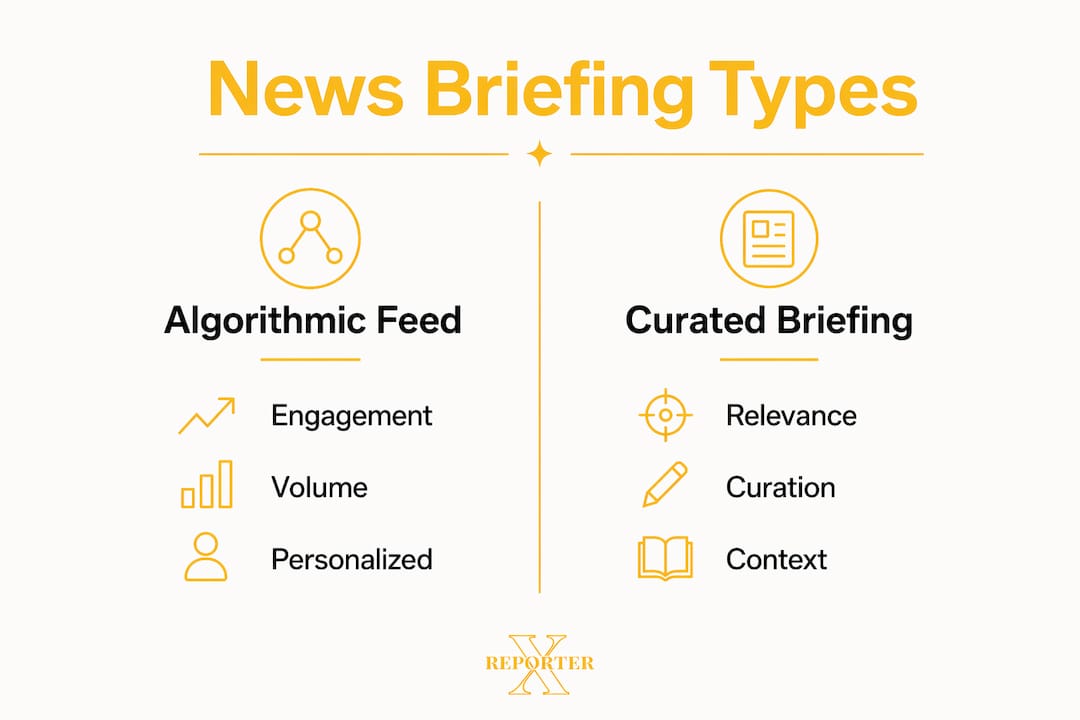
Artificial intelligence has reduced the cost of aggregating raw information to near zero. The real value now lies in human-curated context that helps leaders anticipate challenges and ask the right questions. Raw data updates cannot do that. Only an editor who understands your context can frame a story in a way that connects to your decisions.
| Feature | Algorithmic Feed | Curated Briefing |
|---|---|---|
| Story selection | Engagement-driven | Significance-driven |
| Context provided | Minimal | Editorial framing included |
| Cognitive load | High (unfiltered volume) | Low (pre-prioritized) |
| Knowledge retention | Weaker (passive consumption) | Stronger (active reading) |
| Time required | Open-ended | Fixed (5–15 minutes) |
Pro Tip: When evaluating a briefing service, check whether a human editor is involved in story selection. AI aggregation alone does not replicate the judgment that makes a briefing genuinely useful.
What are the cognitive benefits of reading news briefings daily?
Regular engagement with curated news briefings produces measurable cognitive and educational gains. Reading diverse, curated global news builds vocabulary, fosters empathy, and develops a more nuanced understanding of domestic issues by providing comparative international context. A reader who follows global economic policy briefings, for example, understands local inflation dynamics far better than one who reads only domestic headlines.
The informed-participation gap identified by Pew Research is instructive here. While 75% of U.S. adults say staying informed is important, only 24% feel highly informed on economic and tax policies. That gap exists because access to news is not the same as access to context. Briefings close that gap by delivering both simultaneously.
Consistent briefing readers also develop stronger critical thinking skills over time. Exposure to well-framed stories across multiple sectors trains the mind to recognize patterns, evaluate evidence, and question assumptions. These are not passive benefits. They accumulate through daily practice.
The educational value of briefings extends to:
- Vocabulary growth: Exposure to formal, precise language across sectors builds professional communication skills.
- Global awareness: International coverage provides context that purely local news cannot supply.
- Analytical thinking: Regular engagement with complex, multi-factor stories sharpens reasoning ability.
- Memory retention: Structured, concise formats improve recall compared to fragmented feed consumption.
How to build a daily briefing habit that actually sticks
Selecting the right briefing provider is the first decision. Look for services with clear editorial standards, transparent sourcing, and consistent delivery schedules. Nature Briefing serves the science community. Thexreporter serves readers who need fast, reliable coverage across politics, markets, and technology. Matching the provider to your professional context matters more than choosing the most popular option.
Once you have a provider, integrate the briefing into an existing routine rather than creating a new one. Attach it to a fixed daily anchor, such as morning coffee or a commute. Behavioral research consistently shows that habit stacking, attaching a new behavior to an established one, produces higher long-term adherence than willpower-based scheduling.
Avoiding briefing fatigue requires active filtering. Briefing fatigue stems from poor curation, not from reading too much. Successful professionals treat their briefing like a chief-of-staff function: it filters noise and surfaces only what requires attention. If your current briefing consistently includes content that does not apply to your work or interests, switch providers or adjust your settings.
- Choose one primary briefing source aligned with your professional sector.
- Schedule a fixed reading window of no more than 15 minutes each morning.
- Read actively, not passively. Note one story per session that warrants follow-up.
- Use archives. Connecting news across time transforms daily briefings into a cumulative knowledge base.
- Reassess quarterly. If the briefing no longer matches your information needs, replace it without hesitation.
Pro Tip: Treat each briefing as a filter, not a firehose. Your goal is to identify the two or three stories that require your attention today, not to read every item in full.
Key takeaways
Daily news briefings deliver the most value when they combine editorial judgment, consistent format, and active reader engagement.
| Point | Details |
|---|---|
| Time savings are significant | Structured briefings save professionals up to 180 hours annually compared to unstructured scrolling. |
| Human curation outperforms algorithms | Editorial judgment provides context and significance that engagement-driven feeds cannot replicate. |
| Cognitive benefits compound over time | Regular briefing readers develop stronger vocabulary, global awareness, and analytical thinking. |
| Habit design determines success | Attaching briefings to existing daily routines produces more consistent engagement than willpower alone. |
| Active reading maximizes retention | Using archives and noting follow-up stories transforms briefings from news delivery into a knowledge system. |
What daily briefings taught me about information discipline
I spent years consuming news the way most people do: reactively, across multiple tabs, at unpredictable times. The result was a feeling of being informed without actually being prepared. I knew headlines. I did not know context.
The shift came when I started treating my morning briefing as a professional tool rather than a news habit. The difference is not semantic. A tool has a purpose. You use it deliberately and evaluate whether it is working. When I applied that standard, I became far more selective about which briefing I read and far more intentional about how I engaged with it.
The insight that changed my practice most came from observing how senior decision-makers use briefers. High-level decision-makers use briefings not just to receive information but to identify the right questions to ask. That reframe is worth applying at any level. The goal of a briefing is not to know everything. It is to know what to ask next.
The readers I see getting the most from structured news consumption are not the ones reading the most. They are the ones reading with the clearest purpose. If you want to learn how to read evening news roundups with the same discipline, the same principle applies: define what you need before you start reading.
— Trevor
Stay ahead with thexreporter's daily news briefings
Thexreporter delivers timely, editorially curated summaries across politics, technology, and markets, formatted for readers who need accurate context without information overload. Every briefing is built around significance, not engagement metrics, so you spend less time filtering and more time understanding.
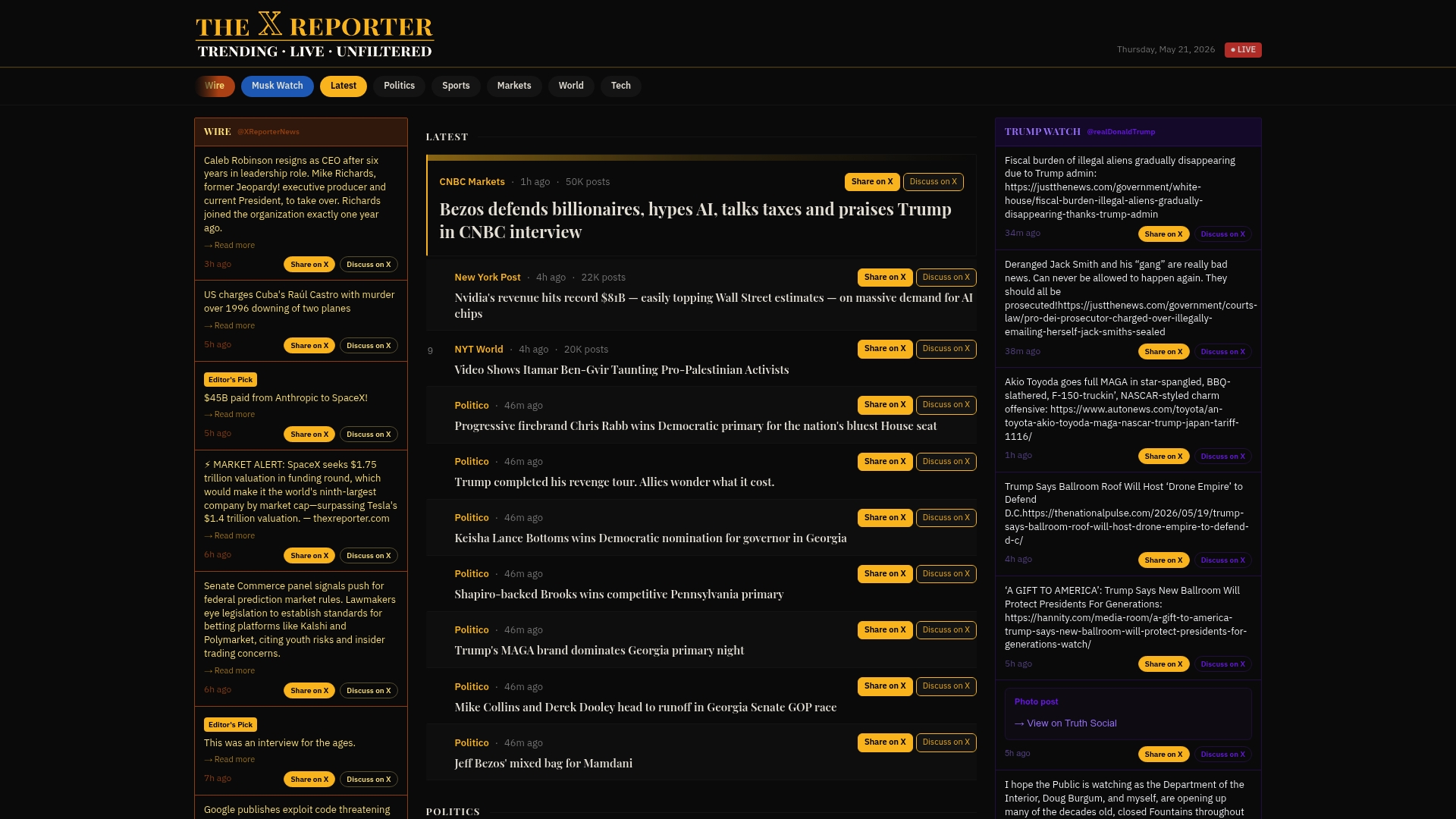
For readers who want reliable daily news coverage without the noise of unfiltered feeds, Thexreporter provides the editorial discipline that algorithmic platforms cannot. Whether you are tracking market movements, political developments, or technology shifts, the platform distills complex stories into clear, prioritized updates. You can also explore how to build a personalized news feed to complement your daily briefing routine.
FAQ
What is a daily news briefing?
A daily news briefing is a curated summary of the most significant news stories, delivered on a fixed schedule, typically each morning. It prioritizes editorial judgment over algorithmic selection to give readers context alongside facts.
How much time do briefings actually save?
Replacing 45–60 minutes of scattered news scrolling with a structured 5–15 minute briefing saves professionals approximately 3–5 hours per week, or roughly 180 hours per year.
Are curated briefings better than social media news feeds?
Yes. Research from Rutgers University shows passive algorithmic feed consumption produces weaker knowledge retention than actively reading a curated briefing. Editorial selection also provides context that engagement-driven feeds omit.
How do i avoid briefing fatigue?
Choose a briefing provider whose coverage matches your professional interests, and treat the briefing as a noise filter rather than a reading obligation. If a briefing consistently includes irrelevant content, replace it.
Why does the importance of daily news go beyond just staying current?
Regular briefing readers develop stronger vocabulary, analytical thinking, and global awareness over time. The value of staying informed extends to civic participation, professional decision-making, and long-term cognitive development.