

Types of cultural news stories are classified into four primary formats: reviews, profiles, reported essays, and long-form features, each serving a distinct narrative and analytical purpose in journalism. Cultural journalism, the recognized industry term for this discipline, covers arts, entertainment, and societal issues across outlets from BBC Culture to NPR's arts desk. Understanding these cultural news categories helps you read more critically, spot editorial bias, and recognize when a story is offering analysis versus advocacy. The formats are not interchangeable. Each carries different standards of evidence, length, and voice.
1. Reviews: the foundation of cultural reporting
Reviews are evaluative critiques that assess a cultural work, including music albums, films, books, theater productions, and visual art exhibitions, against a set of critical standards. NPR Music and BBC Culture publish hundreds of reviews annually, making this the most visible format in cultural journalism. A review typically runs between 300 and 800 words, leads with a verdict, and supports that verdict with specific textual or sensory evidence.
The format has migrated from print to multimedia platforms without losing its core structure. A film review on The New York Times now often includes a video clip or embedded trailer alongside the written critique. This blending of traditional and digital delivery reflects the multimedia skills modern cultural journalists must develop to stay relevant.
Key characteristics of a strong review include:
- A clear verdict stated in the opening paragraph
- Evidence drawn directly from the work being reviewed
- Contextual comparison to the artist's prior output or genre conventions
- A defined critical framework, whether aesthetic, sociological, or historical
Pro Tip: Adapt your critical vocabulary to the medium. Film criticism uses terms like mise-en-scène and montage; music criticism uses timbre and dynamics. Using the right vocabulary signals authority to editors and readers alike.
2. Profiles: deep-dives into cultural figures
A cultural profile focuses on a single person, typically an artist, curator, filmmaker, or creative director, and constructs a narrative arc around a central revealing tension. The profile format goes beyond surface-level celebrity coverage by grounding its claims in extended interviews, observed scenes, and documented facts. This is what separates a profile from a press release rewritten as journalism.
Cultural journalism courses emphasize that profiles require ethical sourcing and confirmed facts alongside interpretive frameworks. A profile of a musician, for example, should not simply recount career milestones. It should locate a contradiction or transformation in that person's work or life and build the story around it.
Strong profiles share these structural elements:
- An opening scene that places the subject in a revealing context
- A central tension or question that drives the narrative forward
- Direct quotes that reflect the subject's voice without distortion
- Fair representation of criticism or controversy where relevant
The ethical dimension matters here. Profiles of marginalized artists, in particular, carry a responsibility to avoid reducing complex individuals to cultural symbols.
3. Reported essays: analysis grounded in evidence
Reported essays are the format that most clearly distinguishes rigorous cultural journalism from opinion writing. The difference is evidence. Where an opinion column argues from a position, a reported essay builds its argument from interviews, documents, and observed facts. The result is a piece that reads like analysis but carries the weight of reporting.

This format is well suited to exploring social, political, or artistic issues that require context. A reported essay on the decline of independent bookstores, for instance, would interview owners, cite sales data, and examine publishing industry trends before drawing conclusions. The evolution from gossip-centered culture reporting to this kind of rigorous, platform-integrated journalism reflects media's growing demand for both depth and credibility.
Reported essays frequently incorporate multimedia elements such as photo essays, audio clips, or data visualizations. These additions strengthen the argument without replacing the prose.
Pro Tip: When writing a reported essay, treat your thesis as a hypothesis, not a conclusion. Let the reporting confirm, complicate, or overturn it. Editors at outlets like The Atlantic and The New Yorker consistently favor essays where the writer's thinking visibly evolved during the reporting process.
4. Long-form features: narrative storytelling at scale
Long-form features are defined by length and ambition. Feature journalism runs between 1,200 and 5,000 words and contextualizes long-term cultural shifts that breaking news cannot sustain. Investigative cultural units at major outlets can spend six to eighteen months on a single project. This editorial investment produces the kind of narrative depth that changes how readers understand a cultural moment.
The format relies on human context. A long-form feature about a music festival does not simply describe the lineup. It traces the economic pressures on independent venues, profiles the organizers, and situates the event within a broader cultural movement. The table below compares long-form features to other common formats:
| Format | Typical length | Primary purpose |
|---|---|---|
| Review | 300–800 words | Evaluate a specific work |
| Profile | 800–2,500 words | Humanize a cultural figure |
| Reported essay | 1,000–3,000 words | Analyze a cultural issue |
| Long-form feature | 1,200–5,000 words | Contextualize a cultural movement |
Long-form features also demand the most from readers. They reward patience with perspective, which is why platforms like Substack have become viable distribution channels for cultural journalists who build loyal subscriber audiences.
5. How editorial choices shape which stories get covered
Editorial prominence in cultural news is not random. Proximity drives coverage in two directions: geographic and emotional. A local theater festival may receive a two-page spread in a regional paper while an equally significant festival in another country receives a single paragraph. This is not bias in the pejorative sense. It reflects the editorial calculation that readers engage more with stories that feel close to their own lives.
Editors also apply archetypal narrative structures to cultural stories. Newsrooms favor hero-versus-villain frameworks because they simplify complex cultural dynamics for broader consumption. A story about a controversial museum acquisition becomes more publishable when framed as a principled curator fighting institutional resistance rather than as a procurement process with competing stakeholders.
"Newsworthiness in culture is culturally mediated; editors adjust coverage intensity and tone based on collective norms, which shapes public perception." — Factors Affecting News Treatment
Editorial decisions also soften coverage of taboo subjects including religion, death, and sex to avoid offending public sensitivities. Understanding this pattern helps you recognize when a cultural story has been shaped by editorial caution rather than journalistic judgment. Platforms that track how trending topics are ranked online confirm that proximity and emotional resonance remain the strongest predictors of cultural story reach in 2026.
6. Emerging formats and platform-driven cultural journalism
Cultural journalism now operates as a hybrid discipline incorporating criticism, reporting, storytelling, and platform strategy. Newsletter journalism on Substack, video essays on YouTube, and audio documentaries on Spotify represent emerging cultural news genres that do not fit neatly into the four traditional categories. These formats borrow structural elements from reviews, profiles, and features but adapt them to platform-specific audience behaviors.
The same news story is often reported very differently across cultures, reflecting local values and political contexts. A story about a controversial film may be framed as a free speech issue in one country and a public decency issue in another. Recognizing this variation is one of the most useful skills a cultural news reader can develop. It reveals that cultural journalism is never fully neutral, regardless of format.
Key takeaways
Cultural journalism's four core formats, reviews, profiles, reported essays, and long-form features, each serve a distinct purpose and require different standards of evidence, length, and voice.
| Point | Details |
|---|---|
| Four primary formats | Reviews, profiles, reported essays, and long-form features define cultural journalism's structure. |
| Proximity drives prominence | Geographic and emotional closeness to the reader determines how much coverage a story receives. |
| Editorial framing shapes perception | Hero-versus-villain archetypes and taboo softening influence how cultural stories reach audiences. |
| Emerging formats expand the field | Newsletter journalism, video essays, and audio documentaries are extending cultural reporting beyond print conventions. |
| Reported essays require evidence | The distinction between opinion and reported essays lies in documented facts, not just analytical depth. |
Why format literacy matters more than most readers realize
I have spent years reading and editing cultural journalism, and the single most common mistake readers make is treating all cultural stories as equivalent. A 400-word review and a 4,000-word reported essay are not the same thing dressed in different lengths. They operate under different rules of evidence, different editorial standards, and different relationships to subjectivity.
The uncomfortable reality is that cultural reporting operates in a gray ethical zone. Journalists must blend personal voice with document-driven objectivity to distinguish themselves from commentators. When you read a profile in The New Yorker, you are reading a piece that required confirmed facts, ethical sourcing, and an interpretive framework. When you read a hot take on a film on a content farm, you are reading something that required none of those things. The formats look similar on a screen. The underlying rigor is not.
My recommendation: before you share or cite a cultural story, identify its format. Ask whether the claims are grounded in reporting or in opinion. Follow outlets like NPR, BBC Culture, and The Atlantic that maintain clear editorial standards across formats. And use resources like daily journalism checklists to build habits around source verification. Format literacy is not an academic exercise. It is the practical skill that separates informed cultural engagement from passive consumption.
— Trevor
Stay current with cultural news on Thexreporter
Thexreporter delivers live, unfiltered coverage across arts, music, film, and societal trends, distilling complex cultural stories into clear editorial summaries without sacrificing depth.
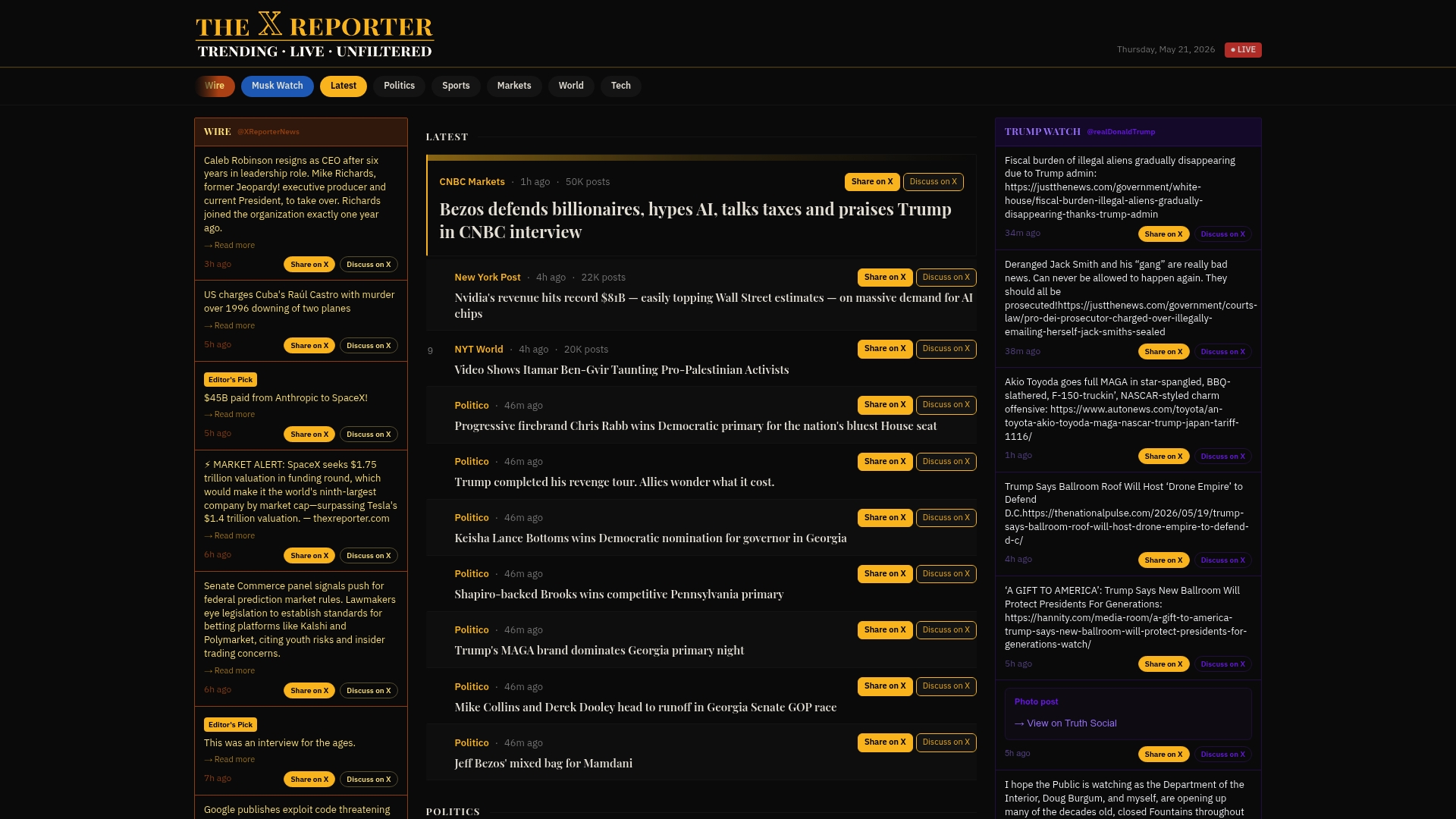
Whether you follow theater, independent film, or the intersection of politics and popular culture, Thexreporter's multi-format approach covers the full spectrum of cultural reporting. The platform aggregates reviews, features, and reported essays from across the media landscape, giving you the context to understand not just what happened, but why it matters. Visit Thexreporter for ongoing cultural coverage that keeps pace with the stories shaping 2026.
FAQ
What are the main types of cultural news stories?
Cultural journalism is organized into four primary formats: reviews, profiles, reported essays, and long-form features. Each format serves a distinct purpose, from evaluating a single work to contextualizing a broad cultural movement.
How does proximity affect cultural news coverage?
Geographic and emotional proximity are primary drivers of editorial prominence. Local cultural events can receive two-page spreads while equally significant distant events receive minimal coverage, reflecting audience engagement calculations rather than objective newsworthiness.
What separates a reported essay from an opinion column?
A reported essay grounds its argument in interviews, documents, and observed facts, while an opinion column argues from a stated position without that evidentiary base. The distinction lies in the reporting process, not the analytical tone.
How long is a long-form cultural feature?
Long-form cultural features typically run between 1,200 and 5,000 words. Investigative cultural units at major outlets can spend six to eighteen months producing a single piece at this scale.
Why do editors soften cultural stories about religion or sex?
Editors adjust coverage of taboo subjects to avoid offending public sensitivities, a practice that shapes which cultural stories reach broad audiences and how those stories are framed. This editorial softening reflects collective norms rather than journalistic judgment about newsworthiness.